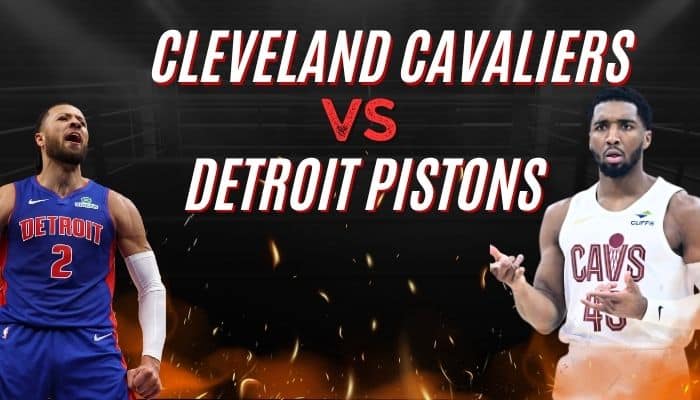

The Detroit Pistons vs Cleveland Cavaliers timeline began in 1970, but the matchup has never followed the pattern of a continuously heated rivalry. Its importance has risen and fallen according to the strength of the two franchises, creating distinct periods rather than one uninterrupted conflict.
Detroit controlled many of the rivalry’s early regular-season chapters and later built championship teams around defense, physical play and collective execution. Cleveland eventually changed the postseason balance through LeBron James, winning three consecutive playoff series between 2007 and 2016.
The rivalry entered another stage in 2026. Detroit returned to the top of the Eastern Conference behind Cade Cunningham, Jalen Duren and coach J.B. Bickerstaff, while Cleveland advanced with a more experienced roster led by Donovan Mitchell, James Harden, Evan Mobley and Jarrett Allen. Their seven-game Eastern Conference semifinal became the first playoff meeting between the franchises that did not involve LeBron.
Detroit still owns the stronger regular-season record. Cleveland, however, has controlled the games carrying the greatest postseason consequences, winning four of the teams’ five completed playoff series.
This guide follows the matchup from its first game in 1970 through Cleveland’s Game 7 victory in 2026, explaining how the balance of power changed, which performances shaped the rivalry and why the next chapter could arrive sooner than expected.
For readers comparing every major era, the Detroit Pistons vs Cleveland Cavaliers timeline provides one continuous reference point.
Detroit Pistons vs Cleveland Cavaliers Timeline
The Detroit Pistons and Cleveland Cavaliers first played on November 29, 1970, when Detroit defeated the expansion Cavaliers 120–99 at Cleveland Arena.
Through May 17, 2026:
- Detroit leads the regular-season series, 135–110.
- Cleveland leads the playoff game record, 19–9.
- Cleveland has won four of the five playoff series.
- Detroit’s only playoff-series victory came in 2006.
- Cleveland won the latest meeting, taking the 2026 Eastern Conference semifinals in seven games.
- LeBron James’ 48-point performance in Game 5 of the 2007 Eastern Conference Finals remains the rivalry’s defining individual display.
- Detroit’s 116–77 victory in 2012 is the largest win by either team.
- Cleveland’s 125–94 Game 7 victory in 2026 is its largest playoff win over Detroit.
Basketball-Reference lists Detroit with 135 regular-season victories to Cleveland’s 110. Adding the 28 postseason games produces a combined record of 144–129 in Detroit’s favor.
These figures establish the statistical foundation of the Detroit Pistons vs Cleveland Cavaliers timeline.
Key Takeaways From the Detroit Pistons vs Cleveland Cavaliers Timeline
- The franchises have played regularly since Cleveland entered the NBA in 1970.
- Detroit leads the regular-season and combined head-to-head records.
- Cleveland holds the stronger postseason record in both games and series.
- The teams have met in the playoffs in 2006, 2007, 2009, 2016 and 2026.
- Cleveland won 12 consecutive playoff games against Detroit between 2007 and 2016.
- Detroit ended that streak in Game 1 of the 2026 Eastern Conference semifinals.
- The rivalry has moved through the Bad Boys era, the Going to Work era, LeBron’s rise and the modern Cunningham-Mitchell period.
- Geography, divisional familiarity and repeated playoff confrontations make the matchup an important but episodic Eastern Conference rivalry.
Together, these points summarize the competitive pattern found throughout the Detroit Pistons vs Cleveland Cavaliers timeline.
Detroit Pistons vs Cleveland Cavaliers Timeline at a Glance
| Year | Event | Result or Significance |
|---|---|---|
| 1970 | First meeting | Detroit defeated Cleveland 120–99 |
| Late 1980s | Detroit becomes an NBA power | The Bad Boys won championships in 1989 and 1990 |
| Late 1980s–early 1990s | Cleveland builds a contender | Mark Price, Brad Daugherty and Larry Nance led the Cavaliers |
| 2004 | Detroit wins another championship | The Going to Work Pistons became an Eastern Conference standard |
| 2006 | First playoff series | Detroit survived Cleveland in seven games |
| 2007 | First conference-finals meeting | Cleveland won 4–2 and reached its first NBA Finals |
| 2007 | LeBron’s historic Game 5 | James scored 48 points and Cleveland’s final 25 |
| 2009 | Third playoff meeting | Cleveland completed a first-round sweep |
| 2016 | Fourth playoff meeting | Cleveland swept Detroit before winning the NBA championship |
| 2025–26 | Regular-season renewal | The teams split four meetings, 2–2 |
| 2026 | Fifth playoff series | Cleveland overcame a 2–0 deficit and won 4–3 |
| 2026 | Decisive Game 7 | Cleveland advanced with a 125–94 road victory |
The NBA’s 2026 playoff preview confirmed that the four earlier postseason meetings occurred in 2006, 2007, 2009 and 2016. The 2026 conference semifinal became the fifth series.
That sequence is the postseason backbone of the Detroit Pistons vs Cleveland Cavaliers timeline.
Why the Detroit Pistons vs Cleveland Cavaliers Timeline Developed Into a Rivalry
Detroit and Cleveland are neighboring Great Lakes markets separated by fewer than 200 miles. Both cities have long professional-sports traditions, and their NBA teams have spent much of their shared history in the same division.
Proximity alone, however, is not enough to create a meaningful rivalry. A rivalry becomes significant when teams repeatedly interfere with each other’s championship ambitions.
That pattern emerged in the mid-2000s.
Detroit entered the 2006 playoffs as an established conference power with recent championship experience. Cleveland arrived as a rising challenger built around a 21-year-old LeBron James. Detroit survived their first series, but Cleveland returned the following year and eliminated the Pistons in the Eastern Conference Finals.
The later sweeps in 2009 and 2016 demonstrated how completely control had shifted toward Cleveland. By 2026, the circumstances had changed again: Detroit was the No. 1 seed, Cleveland possessed more postseason experience and neither team depended on LeBron to define the matchup.
The rivalry is therefore better understood as episodic rather than constant. NBA historical coverage has similarly described the matchup as a longstanding but sporadic rivalry whose intensity increases whenever both organizations become contenders simultaneously.
This episodic pattern is what makes the Detroit Pistons vs Cleveland Cavaliers timeline different from a continuously heated NBA rivalry.
Detroit Pistons vs Cleveland Cavaliers Timeline: All-Time Head-to-Head Record
The overall numbers reveal two different versions of the matchup. Detroit has performed better during the regular season, while Cleveland has achieved more in the playoffs.
| Category | Detroit Wins | Cleveland Wins | Total Games |
|---|---|---|---|
| Regular season | 135 | 110 | 245 |
| Playoffs | 9 | 19 | 28 |
| Combined | 144 | 129 | 273 |
Complete Playoff-Series History
| Year | Round | Winner | Series Result |
|---|---|---|---|
| 2006 | Eastern Conference semifinals | Detroit Pistons | 4–3 |
| 2007 | Eastern Conference Finals | Cleveland Cavaliers | 4–2 |
| 2009 | Eastern Conference first round | Cleveland Cavaliers | 4–0 |
| 2016 | Eastern Conference first round | Cleveland Cavaliers | 4–0 |
| 2026 | Eastern Conference semifinals | Cleveland Cavaliers | 4–3 |
Playoff Summary
| Category | Result |
|---|---|
| Total playoff series | 5 |
| Cleveland series victories | 4 |
| Detroit series victories | 1 |
| Total playoff games | 28 |
| Cleveland playoff wins | 19 |
| Detroit playoff wins | 9 |
| Seven-game series | 2 |
| Sweeps | 2 |
| Conference Finals meetings | 1 |
The regular-season total is supported by Basketball-Reference’s completed 2025–26 head-to-head data, while the postseason totals incorporate all seven games from the 2026 series.
Using separate categories keeps the Detroit Pistons vs Cleveland Cavaliers timeline clear and statistically consistent.
Why Other Websites May Show Different Totals
Not every sports database updates at the same time. Some pages may still show:
- The record before the 2025–26 regular season
- The playoff totals before the 2026 series
- Regular-season games without playoff games
- Combined totals without clearly explaining what is included
For that reason, this article separates regular-season and postseason results rather than presenting one unexplained number.
Preseason and exhibition games are excluded.
That limitation prevents unofficial results from distorting the Detroit Pistons vs Cleveland Cavaliers timeline.
Detroit Pistons vs Cleveland Cavaliers Timeline: Records and Largest Winning Margins
| Record | Game | Margin |
|---|---|---|
| Largest Detroit regular-season win | Detroit 116, Cleveland 77 on April 17, 2012 | 39 points |
| Largest Cleveland regular-season win | Cleveland 128, Detroit 96 on March 14, 2017 | 32 points |
| Largest Detroit playoff win | Detroit 113, Cleveland 86 in Game 1 of the 2006 semifinals | 27 points |
| Largest Cleveland playoff win | Cleveland 125, Detroit 94 in Game 7 of the 2026 semifinals | 31 points |
Detroit’s 2012 victory remains the widest margin in any game between the teams. Cleveland produced its largest regular-season win five years later with a 128–96 result.
The playoff margins reflect the changing balance of power. Detroit opened the first postseason series with a 27-point victory in 2006. Twenty years later, Cleveland delivered a 31-point road win in Game 7, turning the most important game of the modern series into its most one-sided result.
Those contrasting margins create a useful statistical frame for the Detroit Pistons vs Cleveland Cavaliers timeline.
Detroit Pistons vs Cleveland Cavaliers Timeline — Era 1: The Rivalry Begins, 1970–1983
- Cleveland entered the NBA as an expansion franchise in the 1970–71 season. Its first game against Detroit took place on November 29, 1970, at Cleveland Arena.
- The Pistons won 120–99. Detroit was already an established franchise and improved to 16–10 with the victory, while Cleveland fell to 1–26 during the difficult opening stage of its expansion season.
- The Cavaliers gradually developed an identity. Their 1975–76 “Miracle of Richfield” team reached the Eastern Conference Finals and established a stronger basketball following in Northeast Ohio.
- Detroit spent much of the same decade searching for sustained team success despite employing prominent players such as Dave Bing and Bob Lanier.
- The teams’ early meetings were primarily regional regular-season contests. They did not meet in the playoffs, and neither franchise remained in control of the conference long enough to produce a nationally recognized rivalry.
Even so, the period established three elements that would matter later:
- Geographic proximity
- Divisional familiarity
- Repeated regular-season contact
Those foundations became more meaningful once both franchises began building stronger teams.
Era 2: Bad Boys Detroit and Cleveland’s Rise, 1984–2005
The second era gave both organizations identities that shaped how their later playoff meetings were understood.
This part of the Detroit Pistons vs Cleveland Cavaliers timeline explains how two strong but differently timed contenders developed.
Detroit Becomes a Championship Team
Detroit developed into one of the NBA’s strongest teams behind Isiah Thomas, Joe Dumars, Bill Laimbeer, Dennis Rodman and coach Chuck Daly.
The Bad Boys Pistons became known for:
- Physical team defense
- Strong guard leadership
- Interior toughness
- Depth across the rotation
- Mental resilience
- A confrontational postseason identity
Detroit reached three consecutive NBA Finals from 1988 through 1990 and won back-to-back championships in 1989 and 1990.
That success established a standard that remained associated with the franchise long after the original roster changed. Later Pistons teams were still judged by their defense, toughness and willingness to prioritize collective execution over individual recognition.
Cleveland Develops Its Own Contender
Cleveland also assembled a talented team in the late 1980s and early 1990s.
Mark Price supplied shooting and playmaking. Brad Daugherty became a skilled interior scorer, while Larry Nance, Ron Harper, Craig Ehlo and Hot Rod Williams contributed to one of the strongest periods in franchise history.
One of the more consequential regular-season incidents occurred on February 28, 1989. Price suffered a concussion after contact from Detroit’s Rick Mahorn. Cleveland still won the game and improved to 42–12, but its form declined over the remainder of the season. Detroit continued toward the first of its two consecutive championships.
Despite the quality of both teams, they did not meet in the playoffs during this era. Their competitive peaks did not align closely enough. Detroit reached its championship level while Cleveland was still developing, and the Cavaliers’ strongest early-1990s teams emerged as the original Bad Boys roster began to decline.
The Going to Work Pistons
Detroit returned to championship contention during the early 2000s.
Chauncey Billups, Richard Hamilton, Tayshaun Prince, Ben Wallace and Rasheed Wallace formed a balanced starting group defined by defense, role clarity and shared responsibility. The team did not rely on one traditional high-volume superstar.
Detroit defeated the Los Angeles Lakers to win the 2004 NBA championship and returned to the Finals in 2005.
By 2006, the Pistons were an established Eastern Conference authority. Cleveland, meanwhile, had found a generational franchise player in LeBron James.
The rivalry was ready to move from divisional familiarity to postseason consequence.
That transition created the first truly defining period in the Detroit Pistons vs Cleveland Cavaliers timeline.
Detroit Pistons vs Cleveland Cavaliers Timeline — Era 3: The Rivalry Explodes, 2006–2007
The matchup changed permanently when the teams met in consecutive postseasons.
Detroit represented experience, defensive discipline and recent championship credibility. Cleveland represented the rise of a young superstar capable of changing the conference’s established order.
Detroit Pistons vs Cleveland Cavaliers Timeline: 2006 Eastern Conference Semifinals
Detroit entered the 2006 series as the East’s No. 1 seed after a 64-win regular season. Cleveland was making its first playoff appearance since 1998.
2006 Series Progression
| Game | Winner | Score | Series Standing |
|---|---|---|---|
| Game 1 | Detroit | 113–86 | Detroit led 1–0 |
| Game 2 | Detroit | 97–91 | Detroit led 2–0 |
| Game 3 | Cleveland | 86–77 | Detroit led 2–1 |
| Game 4 | Cleveland | 74–72 | Series tied 2–2 |
| Game 5 | Cleveland | 86–84 | Cleveland led 3–2 |
| Game 6 | Detroit | 84–82 | Series tied 3–3 |
| Game 7 | Detroit | 79–61 | Detroit won 4–3 |
Detroit appeared to establish control immediately, winning the opening game by 27 points before taking Game 2.
Cleveland answered with three consecutive victories. The most important was Game 5 in Detroit, where LeBron scored 32 points and helped the Cavaliers escape with an 86–84 win.
That result gave Cleveland a 3–2 lead and an opportunity to close the series at home.
Detroit responded with an 84–82 road victory in Game 6. Back at The Palace of Auburn Hills, the Pistons’ defense controlled the deciding game. Cleveland scored only 61 points, and Detroit advanced with a 79–61 victory.
Why the 2006 Series Mattered
Detroit protected its position as an Eastern Conference power, but the series also revealed how quickly Cleveland was progressing.
A young Cavaliers team had recovered from a 2–0 deficit, won a playoff game in Detroit and pushed a 64-win opponent to Game 7.
The Pistons survived. They did not eliminate the larger threat.
Detroit Pistons vs Cleveland Cavaliers Timeline: 2007 Eastern Conference Finals
One year later, the teams met with a place in the NBA Finals at stake.
Detroit was appearing in its fifth consecutive Eastern Conference Finals. Cleveland had never advanced to the championship round.
The Pistons opened the series with two identical 79–76 victories. Their half-court defense and postseason experience appeared capable of containing Cleveland again.
The Cavaliers responded by winning Games 3 and 4 at home. The series returned to Detroit tied at two games each.
Then came the most famous performance in the rivalry’s history.
Game 5: LeBron Scores Cleveland’s Final 25 Points
On May 31, 2007, LeBron delivered one of the defining performances of his career.
He finished with:
- 48 points
- Nine rebounds
- Seven assists
- Two steals
- 29 of Cleveland’s final 30 points
- Cleveland’s final 25 consecutive points
LeBron repeatedly attacked a veteran Detroit defense late in regulation and through two overtime periods. He scored all 18 of Cleveland’s points in overtime and made the go-ahead layup in the final seconds.
Cleveland won 109–107 and took a 3–2 series lead.
The performance carried greater meaning because of the opponent. Detroit was not an inexperienced team caught in an ordinary regular-season game. The Pistons had won the 2004 championship, returned to the 2005 Finals and reached five consecutive conference finals.
LeBron had taken control against one of the era’s most respected defensive teams on its home court.
No single performance changed the Detroit Pistons vs Cleveland Cavaliers timeline more dramatically.
Game 6: Daniel Gibson Completes the Breakthrough
Detroit adjusted its defensive attention toward LeBron in Game 6, but that created opportunities for Cleveland’s supporting cast.
Rookie guard Daniel Gibson scored a career-high 31 points, including 19 in the fourth quarter. Cleveland won 98–82 and captured the series 4–2.
The victory sent the Cavaliers to the NBA Finals for the first time in franchise history.
What Changed in 2007
The series represented a clear transfer of authority.
In 2006, Cleveland had shown that it could challenge Detroit. In 2007, the Cavaliers proved that they could eliminate the Pistons on the conference’s biggest stage.
Detroit remained competitive, but it was no longer the unquestioned obstacle every rising Eastern team had to fear.
From this point, the Detroit Pistons vs Cleveland Cavaliers timeline increasingly favored Cleveland in postseason play.
Detroit Pistons vs Cleveland Cavaliers Timeline — Era 4: Cleveland Takes Control, 2009–2016
The next two playoff series were far less balanced.
Detroit’s championship roster was breaking apart, while Cleveland moved through two different LeBron-led phases: the 66-win team of 2008–09 and the championship roster built after his return.
2009 Eastern Conference First Round: Cleveland Sweeps Detroit
Cleveland entered the 2009 playoffs with a 66–16 record, the best in the NBA. Detroit qualified as the eighth seed after an uneven season.
The 2009 sweep marked the most one-sided postseason phase of the Detroit Pistons vs Cleveland Cavaliers timeline to that point.
| Game | Result |
|---|---|
| Game 1 | Cleveland 102, Detroit 84 |
| Game 2 | Cleveland 94, Detroit 82 |
| Game 3 | Cleveland 79, Detroit 68 |
| Game 4 | Cleveland 99, Detroit 78 |
LeBron scored 38 points in Game 1, and Cleveland controlled the series from beginning to end. The Cavaliers won all four games by double figures and completed the sweep with an average margin of 15.5 points.
For Detroit, the result confirmed the end of the Going to Work era. Chauncey Billups had already been traded, the lineup no longer possessed its earlier balance and the franchise was entering a prolonged transition.
The series also produced an unusual connection: Ben Wallace, one of the central figures in Detroit’s 2004 championship, played for Cleveland against several former teammates.
2016 Eastern Conference First Round: A More Competitive Sweep
Seven years passed before the next postseason meeting.
When the Detroit Pistons vs Cleveland Cavaliers timeline resumed in 2016, Cleveland possessed a championship-caliber roster.
Cleveland was now built around a Big Three of:
- LeBron James
- Kyrie Irving
- Kevin Love
Detroit had returned to the playoffs behind Reggie Jackson, Andre Drummond and coach Stan Van Gundy.
| Game | Result |
|---|---|
| Game 1 | Cleveland 106, Detroit 101 |
| Game 2 | Cleveland 107, Detroit 90 |
| Game 3 | Cleveland 101, Detroit 91 |
| Game 4 | Cleveland 100, Detroit 98 |
The 4–0 result looked decisive, but three games were decided by 10 points or fewer.
Cleveland’s three stars combined for 81 points in Game 1. Irving later scored 31 in Game 4, and Detroit’s potential winning three-pointer missed on the final possession.
The Cavaliers completed their second consecutive playoff sweep of Detroit and later defeated Golden State to win the first NBA championship in franchise history.
The sweep also extended Cleveland’s postseason winning streak against Detroit to 12 games:
- Final four games of the 2007 series
- All four games in 2009
- All four games in 2016
That streak remained intact for a decade.
It became one of the clearest measures of Cleveland’s control over the Detroit Pistons vs Cleveland Cavaliers timeline.
Detroit Pistons vs Cleveland Cavaliers Timeline — Era 5: Rebuilding and Renewal, 2017–2026
After 2016, the teams moved in different directions.
Cleveland remained a championship contender through LeBron’s second tenure and reached four consecutive NBA Finals from 2015 through 2018.
Detroit struggled to construct a stable core and eventually began another long rebuilding process.
The Pistons selected Cade Cunningham with the first pick in the 2021 NBA Draft. As he developed, Detroit gained a primary scorer and playmaker capable of organizing the offense and carrying late-game responsibility.
Cleveland rebuilt after LeBron’s departure around a younger group that included Darius Garland, Evan Mobley and Jarrett Allen. The acquisition of Donovan Mitchell gave the Cavaliers an established high-level scorer. James Harden’s arrival in 2026 added another experienced creator.
Detroit’s decision to hire former Cleveland coach J.B. Bickerstaff in 2024 created an additional connection. The Pistons improved from 14 wins in 2023–24 to 44 in his first season and 60–22 in 2025–26, earning the Eastern Conference’s No. 1 seed.
For the first time in years, both franchises were strong enough at the same moment to make the matchup matter again.
The result was a modern renewal of the Detroit Pistons vs Cleveland Cavaliers timeline.
The 2025–26 Regular-Season Series
Detroit and Cleveland split their four regular-season meetings, with each team winning twice.
Those four games supplied the immediate regular-season context for the Detroit Pistons vs Cleveland Cavaliers timeline in 2026.
| Date | Result | Key Detail |
|---|---|---|
| October 27, 2025 | Cleveland 116, Detroit 95 | Mitchell scored 35 points in 29 minutes |
| January 4, 2026 | Detroit 114, Cleveland 110 | Cunningham scored 27; Daniss Jenkins added 25 |
| February 27, 2026 | Detroit 122, Cleveland 119 in overtime | Duren produced 33 points and 16 rebounds |
| March 3, 2026 | Cleveland 113, Detroit 109 | Cleveland won without an injured Mitchell |
The first meeting suggested Cleveland still held a clear advantage. The Cavaliers led by as many as 35 points in the 116–95 victory.
Detroit responded in January. Cunningham directed the offense, while Jenkins supplied a major second-quarter scoring burst.
The February game provided the strongest warning that the teams were evenly matched. Cleveland held a late nine-point lead, and Cunningham fouled out, but Detroit recovered to force overtime before winning behind Duren’s interior production.
Cleveland answered in the final meeting, winning 113–109 despite playing without Mitchell.
The 2–2 split did not guarantee a close playoff series, but it showed that Detroit was no longer the overmatched opponent Cleveland had swept in 2009 and 2016.
Detroit Pistons vs Cleveland Cavaliers Timeline: 2026 Eastern Conference Semifinals
Detroit entered the 2026 postseason as the East’s top seed after finishing 60–22.
The Pistons reached the second round by overcoming a 3–1 deficit against Orlando. Cleveland required seven games to eliminate Toronto.
The matchup became the fifth playoff series between the franchises and their first without LeBron.
2026 Series Results
| Game | Winner | Score | Series Standing |
|---|---|---|---|
| Game 1 | Detroit | 111–101 | Detroit led 1–0 |
| Game 2 | Detroit | 107–97 | Detroit led 2–0 |
| Game 3 | Cleveland | 116–109 | Detroit led 2–1 |
| Game 4 | Cleveland | 112–103 | Series tied 2–2 |
| Game 5 | Cleveland | 117–113 in overtime | Cleveland led 3–2 |
| Game 6 | Detroit | 115–94 | Series tied 3–3 |
| Game 7 | Cleveland | 125–94 | Cleveland won 4–3 |
The complete results are recorded on the NBA’s official series hub and Basketball-Reference’s 2026 conference-semifinal page.
These seven games form the newest major chapter of the Detroit Pistons vs Cleveland Cavaliers timeline.
Games 1 and 2: Detroit Establishes Control
- Detroit opened the series with two home victories.
- In Game 1, Cunningham scored 23 points and supplied seven assists. Tobias Harris added 20 points and eight rebounds, while Detroit’s defensive pressure forced 19 Cleveland turnovers that became 31 Pistons points.
- The 111–101 victory ended Cleveland’s 12-game playoff winning streak against Detroit.
- Cunningham followed with 25 points and 10 assists in Game 2. He scored 12 points in the fourth quarter as the Pistons won 107–97 and built a 2–0 series lead.
- Detroit was suddenly two victories away from its first Eastern Conference Finals appearance since 2008.
At that stage, the Detroit Pistons vs Cleveland Cavaliers timeline appeared ready to swing back toward Detroit.
Games 3 and 4: Cleveland Changes the Direction
- The Cavaliers returned home and stabilized their offense.
- Mitchell scored 35 points in Cleveland’s 116–109 Game 3 victory, preventing Detroit from taking a potentially decisive 3–0 lead.
- Game 4 produced one of the defining performances of Mitchell’s postseason career. After scoring only four points in the first half, he erupted for 39 after halftime and finished with 43.
- Cleveland opened the third quarter with 22 consecutive points and produced a 24–0 run spanning the end of the second quarter and beginning of the third.
- The Cavaliers won 112–103 and tied the series. Mitchell’s 39 second-half points tied the NBA playoff record for scoring in one half.
Mitchell’s response became one of the signature modern moments in the Detroit Pistons vs Cleveland Cavaliers timeline.
Game 5: Cleveland Steals the Road Game
- Game 5 became the most damaging loss of Detroit’s series.
- Cunningham scored 39 points, and the Pistons led by nine with approximately three minutes left in regulation. Cleveland responded with a 9–0 closing run to force overtime.
- The Cavaliers then outscored Detroit 14–10 in the extra period and won 117–113.
- Harden led Cleveland with 30 points, eight rebounds and six assists. Max Strus scored 20 and made six three-pointers, while Mobley added 19 points, eight rebounds and eight assists.
- The victory gave Cleveland its first road win of the postseason and placed Detroit one defeat from elimination.
That comeback made Game 5 a critical turning point in the Detroit Pistons vs Cleveland Cavaliers timeline.
Game 6: Detroit Forces a Decider
- Facing elimination in Cleveland, the Pistons delivered their most complete response of the series.
- Cunningham scored 21 points. Duren added 15 points and 11 rebounds, and Detroit received 48 points from its bench.
- The Pistons forced 20 Cleveland turnovers and pulled away in the second half for a 115–94 victory.
- The 21-point margin tied a 66-year-old NBA playoff record for the largest Game 6 road win by a team that entered the game trailing a series 3–2. The St. Louis Hawks had produced the previous example against the Minneapolis Lakers in 1960.
- Detroit had survived again. The series returned to Little Caesars Arena for Game 7.
The deciding game therefore became another winner-take-all entry in the Detroit Pistons vs Cleveland Cavaliers timeline.
Game 7: Cleveland Advances
- Cleveland controlled the deciding game from its early stages and won 125–94.
- Mitchell scored 26 points and recorded eight assists without committing a turnover. Allen added 23 points and seven rebounds, repeatedly giving Cleveland an effective interior option.
- Sam Merrill became the unexpected difference-maker. He scored 23 points in 25 minutes and made five three-pointers. His performance established a Cavaliers Game 7 bench-scoring record.
- Detroit’s leading players could not match their earlier production. Cunningham struggled from the perimeter, Duren became less influential as the series progressed and Harris failed to make a field goal in Game 7.
- Cleveland’s balanced offense removed the possibility of a meaningful comeback.
- The Cavaliers completed their recovery from a 2–0 deficit and advanced to their first Eastern Conference Finals since 2018. It was their first trip to the conference finals after the end of LeBron’s second Cleveland tenure.
That achievement gave the Detroit Pistons vs Cleveland Cavaliers timeline its first major post-LeBron conclusion.
Tactical Turning Points From the 2026 Series
The series was close for six games before Cleveland’s decisive Game 7 victory. Several tactical moments changed its direction.
| Turning Point | What Happened | Why It Mattered |
|---|---|---|
| Detroit’s Game 1 pressure | Cleveland committed 19 turnovers that became 31 Pistons points | Detroit established the series’ physical tone |
| Cunningham’s Game 2 finish | He scored 12 fourth-quarter points | Detroit protected its home court and moved ahead 2–0 |
| Mitchell’s Game 4 second half | He scored 39 points after halftime | Cleveland erased Detroit’s early series control |
| Cleveland’s Game 5 comeback | The Cavaliers erased a nine-point late deficit | Cleveland captured home-court advantage |
| Detroit’s Game 6 defense | The Pistons forced 20 turnovers | Detroit extended the series with a record-tying road win |
| Merrill’s Game 7 shooting | He scored 23 points off the bench | Cleveland gained decisive production beyond its primary stars |
Cleveland averaged approximately 108.9 points over the seven games, while Detroit averaged 107.4. The final difference of 10 total points was heavily influenced by Cleveland’s 31-point Game 7 victory.
Before the final game, Detroit had outscored Cleveland by one point across the first six contests.
That contrast explains the series accurately: it was highly competitive for most of its duration, but Cleveland dominated the game that ultimately determined the winner.
This distinction is essential when interpreting the 2026 portion of the Detroit Pistons vs Cleveland Cavaliers timeline.
Five Most Important Games in the Detroit Pistons vs Cleveland Cavaliers Timeline
1. Game 5 of the 2007 Eastern Conference Finals
Cleveland 109, Detroit 107 in double overtime
LeBron scored 48 points, 29 of Cleveland’s final 30 and the team’s final 25 consecutive points. The performance changed the series and became the rivalry’s defining moment.
2. Game 7 of the 2006 Eastern Conference Semifinals
Detroit 79, Cleveland 61
Detroit’s defense stopped Cleveland after the Cavaliers had recovered from a 2–0 deficit and taken a 3–2 lead.
3. Game 6 of the 2007 Eastern Conference Finals
Cleveland 98, Detroit 82
Daniel Gibson scored 31 points, and Cleveland advanced to the NBA Finals for the first time.
4. Game 4 of the 2026 Eastern Conference Semifinals
Cleveland 112, Detroit 103
Mitchell scored 39 points in the second half and powered Cleveland’s series-changing run.
5. Game 7 of the 2026 Eastern Conference Semifinals
Cleveland 125, Detroit 94
Mitchell, Allen, Mobley and Merrill led a balanced Cavaliers attack that completed the comeback from a 2–0 series deficit.
Players Who Defined the Rivalry
LeBron James
No player has influenced the matchup more than LeBron.
His performances provide the clearest individual thread running through the Detroit Pistons vs Cleveland Cavaliers timeline.
He pushed Detroit to seven games during his first postseason appearance, produced the historic 48-point performance in 2007 and helped Cleveland sweep the Pistons in 2009 and 2016.
His rise transformed Cleveland from an emerging challenger into the team that ended Detroit’s control of the Eastern Conference.
For that reason, LeBron remains the central individual figure in the Detroit Pistons vs Cleveland Cavaliers timeline.
Chauncey Billups
Billups was Detroit’s floor leader during the 2006 and 2007 series.
His physical guard play, composure and decision-making were central to the Pistons’ ability to survive Cleveland in 2006 and remain competitive during the rematch.
Richard Hamilton
Hamilton’s off-ball movement repeatedly tested Cleveland’s defense.
His mid-range scoring and ability to move through screens made him an essential part of Detroit’s half-court offense.
Tayshaun Prince
Prince frequently received the difficult assignment of defending LeBron.
His length, positioning and discipline made him one of Detroit’s most important defenders, even though LeBron eventually produced the breakthrough performance in 2007.
Ben Wallace
Wallace anchored Detroit’s championship defense and helped define the Going to Work identity.
His later appearance for Cleveland in the 2009 series created one of the rivalry’s most unusual player connections.
Kyrie Irving
Irving was Cleveland’s leading scorer in key moments of the 2016 sweep.
His 31-point performance in Game 4 helped the Cavaliers survive Detroit’s final challenge and complete the series.
Cade Cunningham
Cunningham became the face of the rivalry’s modern Detroit chapter.
His scoring and playmaking helped the Pistons build a 2–0 series lead in 2026, while his 39-point performance in Game 5 nearly returned control to Detroit.
Donovan Mitchell
Mitchell supplied Cleveland’s answer after the Cavaliers fell behind 2–0.
He scored 35 in Game 3, 43 in Game 4 and delivered a controlled 26-point, eight-assist performance in Game 7.
Jalen Duren and Jarrett Allen
The modern matchup also developed an important interior battle.
Duren’s physicality and rebounding helped Detroit win regular-season and playoff games. Allen became more influential as the 2026 series progressed and produced 23 points in the deciding game.
James Harden
Harden brought another level of playoff experience and shot creation to Cleveland.
His 30-point Game 5 performance helped the Cavaliers survive Mitchell’s difficult shooting night and secure the road victory that changed the series.
Harden’s contribution added a new veteran influence to the Detroit Pistons vs Cleveland Cavaliers timeline.
Coaching and Roster Connections
The rivalry has also been shaped by coaches, players and executives who represented both organizations.
These shared connections give the Detroit Pistons vs Cleveland Cavaliers timeline an additional layer beyond game results.
J.B. Bickerstaff Faces His Former Team
Bickerstaff joined Cleveland’s coaching staff before the 2019–20 season and became head coach in February 2020. He helped guide the Cavaliers back to the playoffs before the organization dismissed him in 2024.
Detroit hired him shortly afterward.
The Pistons improved from 14 wins before his arrival to 44 in his first season and 60 in his second. By 2026, Bickerstaff was facing his former team in a seven-game playoff series.
His familiarity with Cleveland’s personnel and defensive principles added a strategic and personal dimension to the matchup.
Caris LeVert’s Cleveland History
Caris LeVert spent parts of several seasons with Cleveland before joining Detroit.
His knowledge of Cavaliers personnel and Bickerstaff’s systems created another direct link between the rosters. He also scored 24 points off the bench in Game 4 of the 2026 series, although Cleveland won.
Ben Wallace Changes Sides
Wallace remains one of the most important players in Pistons history.
By 2009, however, he was playing for Cleveland against former teammates. His presence on the opposite side symbolized how much Detroit’s championship roster had changed.
Organizational Familiarity
Other connections extended beyond the most recognizable players.
Detroit president Trajan Langdon previously worked in Cleveland, while coaches Luke Walton and Sidney Lowe had experience on Bickerstaff’s Cavaliers staff. These relationships made the 2026 series more familiar and strategically layered than a typical second-round matchup.
Arenas That Hosted the Rivalry
Venue changes provide a physical record of the matchup’s different generations.
Following those buildings helps readers visualize each era of the Detroit Pistons vs Cleveland Cavaliers timeline.
| Era | Detroit Venue | Cleveland Venue |
|---|---|---|
| First meeting in 1970 | Not applicable | Cleveland Arena |
| Early regular-season history | Cobo Arena and Pontiac Silverdome | Cleveland Arena and Richfield Coliseum |
| 2006–2016 playoff era | The Palace of Auburn Hills | Quicken Loans Arena |
| 2026 playoff renewal | Little Caesars Arena | Rocket Arena |
The Palace hosted LeBron’s 48-point performance in 2007 and Cleveland’s series-clinching victory in 2016.
Little Caesars Arena hosted Detroit’s first two victories in the 2026 series and Cleveland’s dominant Game 7 win.
Each building is associated with a different chapter in the Detroit Pistons vs Cleveland Cavaliers timeline:
- Cleveland Arena represents the expansion beginning.
- The Palace represents Detroit’s championship identity and LeBron’s breakthrough.
- Little Caesars Arena and Rocket Arena represent the Cunningham-Mitchell generation.
How the Style of the Matchup Changed
Early Years: Interior and Mid-Range Basketball
The first meetings occurred in an era built around post play, mid-range scoring and clearly defined positional responsibilities.
Across the Detroit Pistons vs Cleveland Cavaliers timeline, those early styles contrast sharply with the modern three-point game.
Bad Boys Era: Physical Defense
Detroit’s championship teams emphasized contact, defensive rotations and control of the paint.
The Bad Boys identity shaped expectations for later Pistons rosters even when league rules and offensive systems changed.
Going to Work Era: Half-Court Execution
The 2006 and 2007 series were generally played at a deliberate pace.
Detroit relied on balanced scoring, defensive communication and disciplined half-court possessions. Cleveland increasingly depended on LeBron to create advantages against a structured defense.
Big Three Era: Spacing and Individual Creation
By 2016, Cleveland could surround LeBron with Irving, Love and capable perimeter shooters.
The Cavaliers attacked through isolation scoring, pick-and-rolls, drive-and-kick sequences and improved spacing.
Modern Era: Pressure, Versatility and Three-Point Volume
The 2026 series featured switchable defenders, mobile big men, aggressive ball-screen coverage and far greater three-point volume.
Detroit tried to create turnovers and second-chance opportunities. Cleveland relied on Mitchell and Harden to break pressure, with Mobley and Allen providing size and finishing around the rim.
The team that made more three-pointers won six of the seven games, illustrating how much the strategic environment had changed since the low-scoring 2006 series. NBA analysis noted the same three-point pattern entering Game 7.
That evolution makes the Detroit Pistons vs Cleveland Cavaliers timeline a useful example of broader tactical change in the NBA.
Is Pistons vs Cavaliers a Real NBA Rivalry?
Yes—but it is more accurately described as a periodic playoff rivalry than a continuously intense one.
That distinction accurately summarizes the Detroit Pistons vs Cleveland Cavaliers timeline.
The matchup has the necessary foundations:
- Geographic proximity
- Central Division history
- Neighboring sports markets
- Five playoff series
- Several historically important postseason games
- Players and coaches connected to both organizations
What it lacks is uninterrupted competitive overlap.
Detroit and Cleveland have often reached their strongest periods at different times. NBA historical analysis found that through early 2026, the teams had finished above .500 in the same season only a limited number of times since Cleveland entered the league.
When their competitive windows do overlap, however, the rivalry becomes significant very quickly.
- The 2006 series tested Cleveland against an established champion.
- The 2007 series sent the Cavaliers to their first NBA Finals.
- The 2009 sweep confirmed the decline of Detroit’s championship core.
- The 2016 sweep began Cleveland’s championship postseason.
- The 2026 series confirmed Detroit’s return to contention and Cleveland’s ability to advance without LeBron.
The rivalry matters because each series has acted as a measurement of where the two franchises stood within the Eastern Conference.
That recurring test gives the Detroit Pistons vs Cleveland Cavaliers timeline its lasting historical value.
Research Methodology and Statistical Scope
This article follows a defined research process rather than relying on an unexplained third-party timeline.
Sources Prioritized
The article gives priority to:
- Official NBA game pages and playoff series hubs
- Official NBA historical features
- Detroit Pistons and Cleveland Cavaliers team coverage
- Basketball-Reference game logs and head-to-head records
Statistical Rules
- Regular-season and playoff records are reported separately.
- Combined totals are calculated only after both categories are established.
- Preseason and exhibition games are excluded.
- The cutoff date is May 17, 2026.
- The 2026 series statistics refer only to the seven Eastern Conference semifinal games.
- Historical interpretations are identified as analysis rather than presented as official league designations.
Trust-Focused Limitation
Sports databases may update on different schedules. A source that was accurate before May 2026 may not include the completed 2026 playoff series.
For that reason, readers should check the date and scope attached to any head-to-head total before comparing it with the figures in this guide.
This transparent cutoff keeps the Detroit Pistons vs Cleveland Cavaliers timeline accurate and reproducible.
Conclusion
The Detroit Pistons vs Cleveland Cavaliers timeline is ultimately a story of changing authority in the Eastern Conference.
Detroit won the first meeting in 1970, developed championship teams around defense and captured the rivalry’s first playoff series in 2006. Cleveland reversed the postseason balance through LeBron James, winning three consecutive series between 2007 and 2016.
The 2026 Eastern Conference semifinals created a genuinely new chapter. Detroit built a 2–0 lead behind Cunningham, defensive pressure and home-court execution. Cleveland responded through Mitchell’s historic scoring, Harden’s Game 5 performance and a balanced Game 7 effort led by Mitchell, Allen, Mobley and Merrill.
Detroit still holds the better regular-season and combined head-to-head records. Cleveland owns the more important postseason advantage, with four series victories and a 19–9 playoff record. These contrasting records are an important part of the Detroit Pistons vs Cleveland Cavaliers timeline.
The rivalry no longer belongs only to the Bad Boys, the Going to Work Pistons or LeBron’s Cavaliers. Cunningham, Mitchell, Duren, Mobley and Allen have given it a modern identity.
Because both franchises are again capable of competing near the top of the East, the next meaningful chapter in the Detroit Pistons vs Cleveland Cavaliers timeline may not require another decade to arrive.
Detroit Pistons vs Cleveland Cavaliers Timeline FAQs
1. What division connects the Detroit Pistons vs Cleveland Cavaliers timeline?
Both teams compete in the NBA’s Central Division, creating frequent regular-season meetings and long-term divisional familiarity.
2. Does the Detroit Pistons vs Cleveland Cavaliers timeline include an NBA Finals matchup?
No. Both franchises play in the Eastern Conference, so they cannot meet in the NBA Finals. Their deepest shared playoff round was the 2007 Eastern Conference Finals.
3. How many overtime playoff games appear in the Detroit Pistons vs Cleveland Cavaliers timeline?
Two playoff games required overtime: Game 5 of the 2007 Eastern Conference Finals and Game 5 of the 2026 Eastern Conference semifinals.
4. Which coach connects both teams in the modern Detroit Pistons vs Cleveland Cavaliers timeline?
J.B. Bickerstaff coached Cleveland before becoming Detroit’s head coach in 2024, adding a former-team storyline to the modern rivalry.
5. Who completed the first 2–0 comeback in the Detroit Pistons vs Cleveland Cavaliers timeline?
Cleveland completed the rivalry’s first 2–0 series comeback in 2026, winning four of the final five games to advance 4–3.
Disclaimer
This article is for informational and historical purposes only. Statistics, records and game results may change as new meetings occur, so readers should verify the latest data through official NBA sources.