
Introduction: Insurance Certifications
Insurance certifications are crucial in 2026 for anyone seeking a career in the insurance industry. Whether you’re looking to pursue insurance licensing or become a certified insurance professional, understanding these credentials is essential. Insurance certifications ensure that professionals are well-versed in industry standards and able to provide quality service in various sectors, including life insurance, health insurance, and property and casualty coverage. This article will explore the top insurance certifications, licensing requirements, and the benefits they offer to career professionals.
What Are Insurance Certifications?
Insurance certifications are professional credentials granted to individuals who have acquired specialized knowledge and expertise in various aspects of the insurance industry. These certifications are awarded by recognized organizations, industry bodies, and educational institutions that assess the individual’s proficiency in specific areas of insurance. Obtaining these certifications is crucial for professionals aiming to advance their careers in the insurance sector.
Purpose of Insurance Certifications:
Insurance certifications serve multiple essential purposes, both for individuals and for the organizations they work for. They are not just a formality but an essential tool for success and growth in the insurance industry.
Ensuring Expertise and Competency:
One of the primary purposes of insurance certifications is to ensure that individuals are proficient and knowledgeable in their field. These certifications validate the holder’s ability to understand the complexities of different insurance products, regulations, risk management, and claims processes. For instance, a Certified Insurance Professional (CIP) showcases an individual’s comprehensive knowledge of insurance across various categories, including life, health, and property insurance.
Insurance Licensing Requirement:
In many jurisdictions, insurance licensing is a prerequisite for obtaining certain certifications. Insurance agents, brokers, and adjusters need to fulfill state-specific licensing requirements before they can pursue additional certifications in specialized areas. The licensing process ensures that professionals are familiar with the necessary regulations and ethical standards before serving clients. Many advanced certifications like Chartered Life Underwriter (CLU) or Certified Risk Manager (CRM) require professionals to hold a valid insurance license as part of the process.
Boosting Professional Credibility:
Having a certification in the insurance industry enhances your credibility with both clients and employers. It acts as proof that you have completed the necessary education and training to excel in the field. This is particularly important in client-facing roles, where the trust of clients plays a significant role in business success. Insurance certifications, such as Life Insurance Certifications or Health Insurance Certifications, convey to potential clients that the individual is knowledgeable, reliable, and fully qualified to meet their needs. For example, Certified Employee Benefit Specialists (CEBS) are recognized as experts in employee health and retirement benefits, making them highly sought after by employers in the corporate benefits field.
Opening Doors for Career Growth:
Insurance certifications often serve as a key to career advancement. By holding an industry-recognized credential, professionals can open doors to new job opportunities, salary increases, and promotions. Certain insurance adjuster certifications or professional liability certifications are often prerequisites for higher-level positions in the insurance industry. For instance, a Chartered Financial Consultant (ChFC) or a Certified Insurance Counselor (CIC) can pursue senior roles within organizations, including risk management and underwriting leadership positions.
Compliance with Regulatory Standards:
In an ever-changing regulatory environment, certifications help professionals stay up to date with the latest industry standards, laws, and best practices. Some certifications focus on specific areas of compliance, including anti-money laundering (AML) and anti-fraud regulations. For example, financial services certifications are designed to keep agents and brokers compliant with both state and federal regulations governing their operations. This focus on regulatory adherence helps mitigate risk for the professionals themselves as well as the organizations they work for, ensuring they avoid legal penalties and uphold high standards of practice.
Expanding Knowledge in Specialized Areas:
Insurance is a vast industry, covering a wide array of specialized fields. To serve diverse client needs, professionals need to master particular types of insurance. Obtaining certifications in niche areas such as Property and Casualty Certification, Financial Services Certification, or Cyber Insurance allows professionals to demonstrate specialized knowledge and cater to specific market segments. This enables them to deliver more tailored, comprehensive services that directly meet the unique needs of individual clients.
Career Mobility and Job Flexibility:
Insurance certifications also allow professionals to pivot across different roles within the industry. For example, an individual with a Life Insurance Certification could transition into a role that involves Health Insurance Certifications, as both certifications cover significant aspects of financial planning. Such flexibility increases job satisfaction and provides professionals with various career pathways, enhancing long-term job security.
Insurance licensing is a critical component for anyone wanting to work as an insurance agent. To legally sell insurance, agents must comply with state-specific regulations, which typically include completing education, passing exams, and maintaining their license through ongoing education.
- Pre-Licensing Education: In most states, before taking the licensing exam, agents must complete a pre-licensing course that covers the fundamentals of insurance policies, laws, ethics, and the specific area of insurance they intend to sell (e.g., life, health, or property and casualty). The length and content of the courses vary by state and insurance type.
Exams: After completing the required coursework, prospective agents must pass a state exam that tests their knowledge of insurance laws, ethics, policies, and regulations. The exam ensures that the agent is qualified to sell and advise clients within the state’s regulatory framework.
Types of Insurance Certifications
- Life Insurance Certification: This certification focuses on life insurance products, including life policies, annuities, and related financial services. It ensures agents understand the nuances of long-term financial planning.
- Health Insurance Certification: Required for those selling medical plans, this certification ensures agents are well-versed in health insurance policies, including Medicare, Medicaid, and private insurance.
- Property and Casualty Certification: For agents dealing with auto, home, and business insurance, this certification ensures that they have the expertise to assess risk and sell the appropriate policies.
- Continuing Education: To keep their license active, agents are often required to complete continuing education courses on new laws, products, and industry developments. This helps agents stay current and maintain their ability to offer clients accurate, relevant advice.
Overall, insurance licensing ensures that agents are qualified to handle the complexities of insurance products and provide trustworthy service to their clients.
The Certified Insurance Professional (CIP) designation is a prestigious certification that signifies a high level of expertise and commitment within the insurance industry. Offered by various industry organizations, the CIP certification is recognized worldwide and equips professionals with the knowledge and skills needed to excel in the insurance field. This certification is highly regarded by employers and clients alike, serving as an assurance that the holder has met rigorous standards of competence.
Benefits of the CIP:
- Comprehensive Knowledge: The CIP certification covers a broad spectrum of topics, including risk management, insurance policies, claims handling, and legal and ethical considerations. This makes it a valuable asset for professionals working across various areas, such as life, health, and property insurance.
- Increased Credibility: Holding the CIP designation enhances an insurance professional’s credibility. It demonstrates a commitment to continuous learning and professional development, which can attract clients and employers looking for highly qualified agents or brokers.
- Career Advancement: For those already in the insurance industry, obtaining the CIP designation can lead to career growth. It opens the door to higher-level positions, salary increases, and the opportunity to work with more complex cases and higher-profile clients.
- Better Risk Management: The CIP equips professionals with the skills needed to better assess and manage risk. This knowledge is crucial in advising clients accurately and helping them choose the right coverage for their needs.
- Improved Client Interactions: The CIP program emphasizes client relationships and communication, enabling professionals to better understand their clients’ needs and provide tailored solutions. This leads to stronger customer loyalty and satisfaction.
Overall, the CIP designation not only enhances the skill set of insurance agents but also boosts their professional standing, making them more competitive in the industry.
As the insurance industry continues to evolve in 2026, staying ahead of the curve with the right certifications is essential for career growth and competitiveness. Some of the most in-demand certifications will provide insurance professionals with the skills and knowledge required to succeed in specialized areas of the field.
1. Life Insurance Certifications
Life insurance certifications are crucial for professionals looking to sell life policies, which protect clients’ families and their financial futures. These certifications focus on understanding life insurance products, annuities, and long-term financial planning, ensuring that agents can offer informed solutions for their clients’ needs.
2. Health Insurance Certifications
As the healthcare landscape grows more complex, health insurance certifications are becoming increasingly important. These certifications allow agents to specialize in selling health-related insurance products, including individual and family plans, Medicare, and Medicaid. Professionals with this certification are equipped to help clients navigate the complexities of healthcare coverage.
3. Property and Casualty Certification
For agents working in personal or commercial insurance, property and casualty certification is essential. This certification covers a wide range of insurance types, including auto, homeowners, renters, and business insurance. Agents with this certification are skilled at assessing risk and advising clients on appropriate coverage for their property and assets.
4. Financial Services Certification
The financial services certification equips agents with a deep understanding of financial products beyond traditional insurance. It ensures that professionals are capable of recommending comprehensive financial plans, including investments, retirement planning, and wealth management solutions, providing added value to their clients.
5. Insurance Adjuster Certifications
Insurance adjusters play a key role in assessing and settling claims. This certification is vital for professionals working in claims adjustment, where they evaluate damages and determine appropriate payouts. Insurance adjuster certifications ensure that these professionals have the necessary skills to handle complex claims fairly and accurately.
6. Chartered Life Underwriter (CLU)
The CLU designation is one of the most prestigious certifications for life insurance professionals. It focuses on advanced knowledge in retirement and estate planning, providing agents with the expertise to offer high-level advice on wealth transfer, tax planning, and securing clients’ financial legacies.
These certifications provide insurance professionals with specialized knowledge that enhances their credibility and enables them to offer more tailored and effective solutions to clients, ultimately driving career success in 2026 and beyond.
Top 5 Insurance Certifications for Career Growth
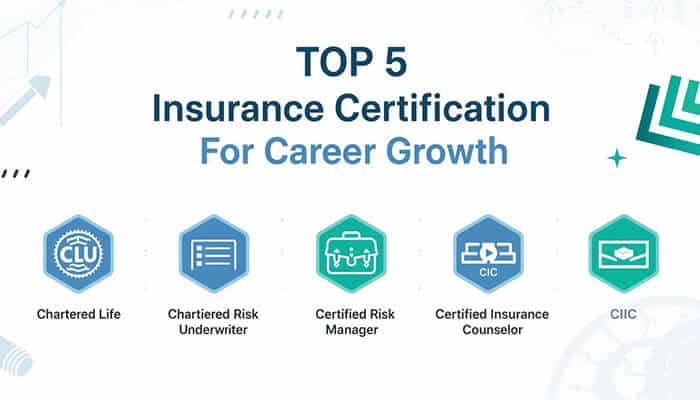
For insurance professionals looking to advance their careers in 2026, several certifications offer tremendous growth opportunities.
For insurance professionals aiming to accelerate their careers in 2026, earning the right certifications can be a game-changer. These top five certifications not only enhance knowledge and expertise but also significantly boost credibility, offering opportunities for career advancement in various areas of the insurance industry.
1. Chartered Life Underwriter (CLU)
The CLU designation is one of the most prestigious certifications for life insurance professionals. It focuses on life insurance, estate planning, and retirement planning. Earning a CLU enhances an agent’s ability to handle complex client needs, including tax-efficient wealth transfer and advanced financial planning. This certification is highly valued for professionals seeking to work with high-net-worth individuals and those looking to provide in-depth retirement solutions.
2. Certified Insurance Counselor (CIC)
The CIC certification is designed for professionals looking to deepen their understanding of the insurance business. It covers areas such as business operations, claims management, and insurance industry standards. This certification helps professionals handle a variety of insurance needs, including complex and high-risk situations. It is particularly beneficial for agents working with commercial insurance or specializing in niche areas.
3. Certified Risk Manager (CRM)
Risk management is a critical component of the insurance industry. The CRM designation is essential for professionals who want to specialize in managing corporate and organizational risks. With this certification, agents can help businesses identify, assess, and mitigate potential risks, making it a must-have for those looking to handle large-scale commercial policies and corporate clients.
4. Accredited Adviser in Insurance (AAI)
The AAI certification is perfect for professionals who want to expand their knowledge across a wide range of insurance products. It covers everything from personal insurance to commercial policies, providing agents with a comprehensive understanding of various lines of insurance. This certification is valuable for agents aiming to become well-rounded advisors, capable of addressing the diverse needs of clients.
5. Certified Employee Benefit Specialist (CEBS)
The CEBS designation focuses on employee benefits, including pension plans, healthcare coverage, and retirement benefits. This certification is ideal for agents working with businesses to design and manage employee benefit packages. With a growing demand for comprehensive employee benefits solutions, the CEBS certification equips professionals to offer expertise in one of the fastest-growing areas of the insurance industry.
How to Choose the Right Insurance Certification
Choosing the right insurance certification is a key step in advancing your career in the insurance industry. It involves careful consideration of your professional goals, the types of insurance you want to sell, the demands of the market, and the time and financial investment required. Here’s how you can make an informed decision when selecting an insurance certification.
1. Assessing Your Career Goals
One of the first steps in choosing the right certification is to align it with your career goals. If your aim is to work in life insurance, obtaining Life Insurance Certifications will give you the knowledge necessary to sell life policies, annuities, and offer financial planning services. Similarly, if you wish to specialize in health insurance and assist clients with healthcare coverage, Health Insurance Certifications are essential to help you navigate medical plans, Medicare, and other health-related policies. Understanding your long-term career aspirations is crucial in selecting a certification that provides the best return on investment.
2. Consider the Market Demand
Different types of insurance certifications have varying levels of demand depending on the region or market you plan to serve. For example, Property and Casualty Certifications are highly sought after for agents specializing in auto, home, and business insurance, particularly in areas where natural disasters or accidents are common. On the other hand, if you are interested in working with corporate clients or commercial insurance, certifications like Certified Risk Manager (CRM) could provide you with the specialized skills needed for risk management. Conducting market research on local demand will help you choose a certification that aligns with the needs of the area you serve.
3. Evaluate the Cost and Time Commitment
While certifications can significantly enhance your qualifications, they often require a substantial time and financial investment. Certification programs typically involve pre-licensing education, passing exams, and possibly completing continuing education courses. The cost of these programs varies, so it’s important to evaluate the fees, study materials, and time commitment needed before pursuing a certification. Make sure you’re prepared for both the financial investment and the time it will take to complete the certification process.
4. Importance of Continuing Education in Insurance
Insurance is a dynamic field that evolves with new regulations, policies, and market trends. To maintain your certification and remain competitive in the industry, continuing education is essential. Many insurance certifications require professionals to complete ongoing courses to stay current with industry changes, including updates to insurance laws, customer service practices, and emerging technologies. Staying up-to-date with these developments will not only ensure that you comply with state regulations but also allow you to offer the most relevant services to your clients.
By taking into account your career path, market demand, costs, and the necessity of continuing education, you can select the right insurance certification that will provide long-term benefits and help you achieve success in the insurance industry.
Why Choose Insurance Adjuster Certification
Insurance adjusters play a crucial role in the insurance industry, particularly in the claims process and disaster recovery. Earning an Insurance Adjuster Certification can significantly enhance your career prospects in these fields by demonstrating your expertise in assessing damage and determining the appropriate payouts for various types of insurance claims.
Enhances Career Prospects

The demand for skilled insurance adjusters continues to grow, particularly in fields like property and casualty, auto, and commercial insurance. With an Insurance Adjuster Certification, you will gain the specialized knowledge needed to evaluate claims efficiently, determine the severity of damages, and ensure fair compensation for policyholders. This certification not only boosts your qualifications but also increases your marketability to potential employers, including insurance companies, adjusting firms, and even government agencies in the aftermath of disasters.
Opens Doors to Various Insurance Roles
An Insurance Adjuster Certification prepares professionals for a wide range of positions within the property, casualty, and commercial insurance sectors. Adjusters are essential in handling claims related to homes, cars, businesses, and natural disasters. This versatility makes the certification appealing for professionals looking to work in different aspects of the insurance industry or specialize in niche markets like catastrophe claims or liability insurance.
Critical for Disaster Recovery
Insurance adjusters also play a key role in disaster recovery, especially following natural calamities like hurricanes, floods, or wildfires. Having the ability to evaluate damage in these challenging circumstances is vital for ensuring prompt and accurate claim settlements. An adjuster with specialized training is better equipped to manage the complex, high-volume claims that arise after a disaster, helping communities rebuild and restore.
The Role of the Chartered Life Underwriter (CLU)
The Chartered Life Underwriter (CLU) is one of the most respected designations in the life insurance industry. The CLU certification provides professionals with advanced knowledge in retirement planning, estate planning, and risk management, making it an ideal choice for individuals seeking to specialize in wealth management and life insurance solutions.
Advanced Knowledge in Life Insurance
The CLU designation equips professionals with the expertise to handle complex life insurance policies, including permanent life insurance, annuities, and other financial products. This advanced knowledge is particularly valuable for agents working with high-net-worth individuals, businesses, and estates who need personalized solutions to meet their financial goals.
Highly Respected in the Financial Services Sector
The CLU is highly regarded within the financial services industry, offering professionals a prestigious credential that signifies a commitment to excellence in life insurance and financial planning. Holding this designation can enhance your reputation among clients and colleagues, signaling that you are well-versed in the intricacies of estate planning, tax-efficient wealth transfer, and risk management.
Ideal for Complex Estate and Life Insurance Management
For professionals managing complex estate and life insurance policies, the CLU is indispensable. It is especially suited for those who assist clients with large estates, retirement planning, and wealth management. The CLU provides the knowledge to offer clients strat
Conclusion: Which Insurance Certification is Right for You?
In 2026, there are many paths for career advancement in insurance. Understanding the various insurance certifications will help you choose the one that aligns with your career ambitions.
Choose based on your interests (e.g., Life insurance certifications for financial planning or health insurance certifications for healthcare).
Assess the market demand and job growth in your area to make an informed decision.
The key is to continually improve your qualifications to stay competitive and deliver the best possible service to your clients.
(FAQs) on Insurance Certifications
1. What is the importance of insurance certifications?
Insurance certifications validate an agent’s knowledge, skills, and professionalism, making them more credible to clients and employers. They also increase job opportunities and earning potential by demonstrating expertise in specific areas of insurance.
2. How long does it take to earn an insurance certification?
The time required to earn an insurance certification varies depending on the program. Pre-licensing education can take anywhere from a few weeks to several months, while certifications like the Chartered Life Underwriter (CLU) or Certified Risk Manager (CRM) may take longer due to their advanced and specialized content.
3. What are the costs associated with getting certified?
The costs for insurance certifications can range widely. Basic licensing courses may cost a few hundred dollars, while advanced certifications like the CLU or CIC may cost several thousand dollars in total, including exam fees, study materials, and continuing education requirements.
4. Do I need to renew my insurance certification?
Yes, most insurance certifications require ongoing continuing education to ensure that professionals stay updated with new laws, regulations, and industry practices. Renewal requirements vary by certification, with some requiring a set number of continuing education hours every few years.
5. Which insurance certification should I pursue if I want to specialize in life insurance?
If you want to specialize in life insurance, the Chartered Life Underwriter (CLU) certification is highly recommended. It provides advanced knowledge in areas such as estate planning, retirement planning, and risk management, making it ideal for life insurance professionals.