
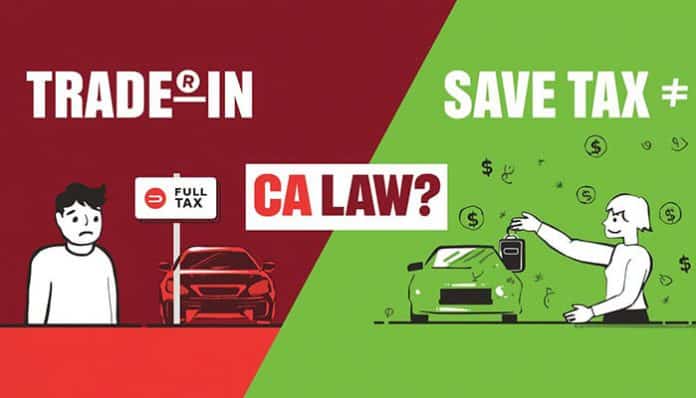

How Does Trade-In Reduce Sales Tax in California Work in 2026
In California, vehicle sales tax is calculated based on the full purchase price of the car, not the price after a trade-in. This rule comes directly from state tax law, which requires that the entire agreed selling price including any trade-in value be included in the taxable amount. The statewide base sales tax rate is 7.25 percent, but local district taxes can increase the total to 8 to 10 percent or more depending on location.
Sales tax is applied before any trade-in credit is deducted, meaning your trade-in reduces your payment but not your tax liability. In simple terms, California treats a trade-in as part of the total transaction value rather than a deduction. This is why buyers often pay higher taxes compared to states that allow trade-in tax credits.
Key Points to Understand
- Sales tax is based on the full vehicle price, not the net price after trade-in
- The trade-in value is still considered part of the taxable transaction
- Local tax rates can significantly increase your total tax cost
- Trade-ins reduce your loan or cash payment but do not reduce tax
Understanding Does Trade-In Reduce Sales Tax in California helps you avoid common mistakes and calculate the true out-of-pocket cost. While trade-ins offer convenience and financial flexibility, they do not provide any direct tax savings under California law.
Does Trade-In Reduce Sales Tax in California
No, it does not reduce sales tax. California requires sales tax to be calculated on the full selling price of the vehicle, not the balance after your trade-in is applied. The California Department of Tax and Fee Administration states that the value of a trade-in is taxable and should not be deducted when computing tax on the vehicle sale.
This is the reason many buyers are surprised at the dealership. Even if you trade in a car and lower the amount you finance, the taxable amount usually stays tied to the full purchase price of the new or used vehicle. In practical terms, your trade-in reduces your down payment burden, but it does not create a California trade-in tax break.
Key points buyers should know
- California taxes the full selling price of the vehicle
- Trade-in value does not reduce the taxable amount
- Your trade-in can lower your loan amount and monthly payment
- Local district taxes can push the total rate above the 7.25 percent statewide base
- Understanding Does Trade-In Reduce Sales Tax in California helps buyers estimate the true out the door cost more accurately
Does Trade-In Reduce Sales Tax in California Real Buyer Example
Example buying a 30000 dollar car with a 10000 dollar trade-in
In California
Taxable amount is 30000
Sales tax at 8 percent is 2400
Trade-in reduces only your payment so you pay 20000 plus 2400 tax
In a state with trade-in tax credit
Taxable amount is 20000
Sales tax at 8 percent is 1600
This means you pay more tax in California compared to states that allow deductions. California treats the trade-in as part of the taxable transaction, so the credit lowers your out of pocket cost but does not lower the sales tax calculation. The California Department of Tax and Fee Administration says tax is based on the full selling price and the value of a trade-in is still taxable.
This comparison helps explain why buyers searching Does Trade-In Reduce Sales Tax in California are often surprised at the dealership. In many trade-in credit states, tax is calculated only on the price difference, which can save hundreds of dollars depending on the vehicle price and local tax rate. Texas, for example, calculates motor vehicle tax on the remaining selling price after the trade-in deduction.
Key points to understand
- California taxes the full selling price of the vehicle, not the net price after trade-in.
- A 10000 dollar trade-in can reduce your loan balance, but it does not reduce California sales tax.
- In trade-in credit states, the same deal can produce a lower taxable amount and lower total tax bill.
- Understanding Does Trade-In Reduce Sales Tax in California helps buyers estimate the true out the door cost before signing paperwork.
Why Does Trade-In Reduce Sales Tax in California Not Apply
California treats a trade-in as part of the total transaction value, not as a deduction from the taxable selling price. State regulations say that when merchandise is traded in, the retailer must include the agreed trade-in allowance in the measure of tax, which is why dealers still calculate tax on the full vehicle price.
This approach creates a consistent rule across dealer vehicle sales in California. In practical terms, the state is taxing the selling price of the vehicle you are buying, even when part of that value is being paid through your old car instead of cash. That is the core reason buyers asking Does Trade-In Reduce Sales Tax in California often discover there is no California trade-in tax break at signing.
What a Trade-In Actually Does
Even though you do not save on taxes, a trade-in can still be valuable because it reduces how much cash you need to bring in or how much you need to finance. That can make the deal easier to manage, especially if you want to lower monthly payments or avoid the extra work of a private-party sale. California DMV fee pages also show that a vehicle purchase can involve additional registration and licensing costs, so lowering the financed balance may still make the overall transaction easier to handle.
For many buyers, the biggest benefit of trading in is convenience. The dealer handles the appraisal, paperwork, and timing in one transaction, while a private sale may produce a higher price but usually takes more effort, more communication with buyers, and more transfer steps. California DMV guidance for private-party purchases shows that separate title transfer and tax-related steps still apply outside the dealership setting.
Key benefits of a trade-in
- Reduces your loan amount or upfront cash needed at purchase.
- Can lower your monthly payment because you finance a smaller balance.
- Simplifies the process since the dealer handles the trade and purchase together.
- May help with financing approval because the trade-in works like built-in equity or a down payment.
- Keeps the transaction faster if you do not want to market and sell the car yourself.
Does Trade-In Reduce Sales Tax in California FAQs
1. Does Trade-In Reduce Sales Tax in California for used cars
No, Does Trade-In Reduce Sales Tax in California applies the same rule to both new and used cars. Sales tax is always calculated on the full purchase price, not after deducting the trade-in value.
2. Does Trade-In Reduce Sales Tax in California at dealerships only
No, the rule applies to all dealer transactions in California. Even when buying from a dealership, Does Trade-In Reduce Sales Tax in California still results in tax being charged on the full vehicle price.
3. Does Trade-In Reduce Sales Tax in California if I pay cash
No, payment method does not change the rule. Whether you finance or pay cash, Does Trade-In Reduce Sales Tax in California still means tax is calculated on the full selling price.
4. Does Trade-In Reduce Sales Tax in California compared to other states
In most other states, trade-ins reduce the taxable amount. However, Does Trade-In Reduce Sales Tax in California is different because the state does not allow any trade-in tax deduction.
5. Does Trade-In Reduce Sales Tax in California affect total car cost
Yes, it affects your total cost indirectly. Since Does Trade-In Reduce Sales Tax in California does not allow tax reduction, buyers often pay more tax, increasing the overall cost of purchasing a vehicle.
