

When purchasing a new car, one of the essential decisions you may face is whether to purchase Guaranteed Asset Protection (GAP) insurance. GAP insurance is designed to protect you financially in the event your car is totaled or stolen, covering the difference between what your regular car insurance pays and the amount you owe on your loan or lease. But how much is GAP insurance on a new car? In this comprehensive guide, we’ll break down the costs of GAP insurance, factors that influence its price, and whether it’s worth the investment.
Understanding how much GAP insurance on a new car costs can help you make an informed decision. The price of GAP insurance depends on several factors, such as whether you purchase it through a dealership, auto insurance provider, or bank. Each method offers varying levels of protection and pricing, and the right choice will depend on your financial situation and the type of coverage you need.
For those financing or leasing their vehicles, knowing how much GAP insurance on a new car will cost is essential in assessing whether the investment is worth it. GAP insurance can be an affordable way to safeguard your finances in the event of a total loss, providing peace of mind that you won’t be stuck paying off a loan for a car you no longer own. In the next sections, we will explore the different options for obtaining GAP insurance and what factors contribute to its price.
What Is GAP Insurance and Why Is It Important?
GAP insurance is crucial for new car buyers because new cars depreciate in value rapidly. Within the first few years, your vehicle could lose a significant portion of its value. If you get into an accident or your car is stolen, your auto insurance will only pay the current market value of the vehicle, not the amount you owe on your loan or lease. GAP insurance bridges that gap, covering the difference and ensuring that you’re not left paying for a car you no longer have.
Types of GAP Insurance
1. Standard GAP Insurance:
Standard GAP insurance covers the difference between your car’s current market value and the remaining balance on your loan or lease. This type is most commonly used for new car purchases, offering protection in case your car is totaled or stolen within the first few years.
2. Lease GAP Insurance:
If you’re leasing your car, Lease GAP insurance is essential. It covers the difference between what your insurance pays out and the amount remaining on your lease, including additional fees like early termination charges or penalties for excess mileage. This type is particularly beneficial for people who lease new cars, as they often owe more than the car’s market value during the lease term.
How to Purchase GAP Insurance
Through the Dealership:
-
- Pros: Purchasing GAP insurance through the dealership is convenient, as it’s often offered when you finance or lease your car. It’s typically added to the total cost of your car loan or lease, making it easy to add to your monthly payments. This method is straightforward because it’s right there in the paperwork and doesn’t require any additional steps.
- Cons: This option can be significantly more expensive compared to other alternatives. Dealerships tend to mark up the cost of GAP insurance, and it may be bundled into your loan, adding interest costs over time. This means that not only are you paying for the GAP insurance, but you’re also paying interest on it over the life of your loan or lease. It’s essential to shop around and compare dealership prices with those offered by auto insurers or other providers before agreeing to purchase GAP insurance at the dealership.
Through Auto Insurance Providers:
-
-
- Many auto insurance companies offer GAP insurance as an add-on to your existing auto policy. You can easily add it by contacting your insurance provider and asking them to include it in your coverage. This option is usually more affordable and can be paid annually, often costing between $20 and $100 per year. You can also opt to pay it in installments, making it easier to manage. Additionally, purchasing through an auto insurer often ensures that you are dealing with a provider you already trust for your regular car insurance, allowing for a smoother claims process if an accident occurs.
- It’s worth checking if your existing auto insurance provider offers any discounts for bundling GAP insurance with your regular auto policy. Some insurers may also provide customizable options that allow you to adjust the level of coverage, depending on your specific needs and loan balance.
-
Through Lenders or Banks:
-
-
-
- Some lenders and banks offer GAP insurance as part of the financing package. This can be a convenient option if you’re financing your car through the same bank or lender. Some lenders even include GAP insurance as part of their auto loan offerings, which means the premium will be included in your monthly car payments. While this might be convenient, it’s essential to review the terms closely. Lenders may offer GAP insurance at a higher rate than what’s available through your auto insurance company.
- Additionally, the costs of purchasing GAP insurance through lenders may be bundled with your loan, which could affect your interest rate and the total amount paid over the loan period. Always inquire about the price and compare it with the alternatives available from dealerships or insurers. It’s crucial to make sure that the premium is competitive, as lenders sometimes include these costs without offering the best deals.
-
-
Exclusions or Limitations of GAP Insurance
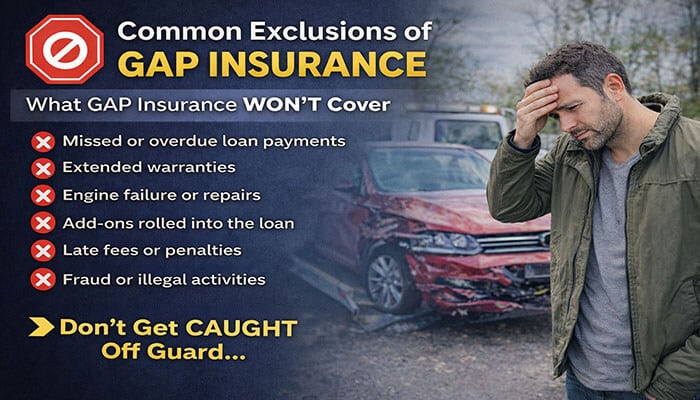
While GAP insurance is helpful, it’s important to know what it does not cover:
| Exclusion/ Limitation | Details |
|---|---|
| What It Doesn’t Cover | GAP insurance does not cover damage from normal wear and tear, mechanical breakdowns, or damage not caused by a covered event such as theft, accidents, or natural disasters. |
| High-Value Cars | High-end or luxury cars may have exclusions or limitations based on how quickly they depreciate. GAP insurance may not cover the full amount owed on a luxury vehicle if its market value drops significantly. |
Does GAP Insurance Cover Everything?
There are some common misconceptions about GAP insurance coverage, such as:
- Rental Cars: GAP insurance does not typically cover rental vehicles. If your rental car is stolen or totaled, you would need separate insurance coverage.
- Accidents Outside Intended Use: If the car is used for non-permitted purposes (e.g., racing or off-roading), GAP insurance may not apply. Always check the fine print to understand the specific terms of your GAP insurance policy.
Alternatives to GAP Insurance
If you feel that GAP insurance may not be right for you, there are some alternatives to consider:
- Declining Coverage: Some insurers allow you to opt out of GAP insurance after a certain period or once your car’s loan balance is lower than its current market value.
- Other Car Protection Plans: New car replacement coverage, which some auto insurers offer, provides a similar level of protection as GAP insurance but may offer additional benefits, such as full replacement of your vehicle with a new one of the same make and model.
Case Study or Example
Let’s say you purchased a new car for $30,000, financed through a loan. After one year, your car is in an accident, and your insurer only offers $18,000 as the market value. If you still owe $22,000 on your loan, GAP insurance will cover the $4,000 difference, ensuring that you aren’t stuck paying for a car you no longer have.
Is GAP Insurance Required?
While GAP insurance is not mandatory, it is highly recommended for those financing or leasing a new car. If your loan or lease balance exceeds the market value of your car, GAP insurance can prevent financial strain in case of an accident or theft. In some cases, lenders may require GAP insurance for car loans, but it is generally not a legal requirement.
Customer Reviews or Testimonials
Many car buyers who purchased GAP insurance found it to be a valuable investment. Customers often mention the peace of mind it provides, knowing they won’t have to pay for a car they no longer own. Others appreciate the convenience of purchasing it through their insurance provider rather than the dealership, as it tends to be more affordable.
What to Do if You Don’t Have GAP Insurance
If you don’t have GAP insurance but want to reduce your financial risk, consider the following options:
- Full-Coverage Insurance: Make sure your policy includes comprehensive and collision coverage. While it won’t cover the loan balance, it can help pay for the repairs or replacement of your car.
- Track Your Car’s Depreciation: Monitor your car’s value regularly. If the market value of your car drops significantly and you still owe more than it’s worth, you may want to consider purchasing GAP insurance at that point.
Pros and Cons of GAP Insurance
Pros:
- Financial Protection: In case your car is totaled or stolen, GAP insurance ensures you don’t pay more than the car is worth.
- Peace of Mind: It gives you confidence that you won’t face significant financial burden in the event of an accident or theft.
Cons:
- Added Cost: GAP insurance can increase your monthly car payment or annual insurance costs, depending on how you purchase it.
- Potential Over-Coverage: If your car’s value has stabilized, or you’ve paid off a significant portion of your loan, you may not need GAP insurance.
Conclusion: How Much Is GAP Insurance on a New Car?
On average, GAP insurance for a new car will cost between $20 and $100 annually if purchased through your auto insurer. If bought through a dealership, the cost can range from $400 to $700 for a one-time premium. The price depends on factors such as where you purchase the insurance, your car’s depreciation rate, and the loan or lease amount. GAP insurance is most beneficial for those who finance or lease a new car and want to ensure they’re protected in case of an accident or theft.
Before making your decision, carefully consider the costs and consult with your insurance provider to get the best deal. How much is GAP insurance on a new car can vary depending on your situation, but it’s an investment that can save you from significant financial loss, especially if your car loses value faster than you expect. Ensuring you have the right coverage is essential for your peace of mind and financial security.
How Much Is GAP Insurance on a New Car FAQs
1. How much is GAP insurance on a new car compared to regular car insurance?
GAP insurance costs $20 to $100 annually through auto insurers, but can be $400 to $700 when purchased from a dealership. It covers the difference between your car’s value and your loan balance, unlike regular car insurance.
2. How much is GAP insurance on a new car, and is it worth the extra cost?
GAP insurance typically costs $20 to $100 per year, and is worth the cost for those financing or leasing a new car. It ensures you won’t pay for a car that’s no longer in your possession.
3. How much is GAP insurance on a new car for luxury vehicles?
GAP insurance for luxury vehicles typically costs $400 to $700 as a one-time premium from dealerships, or $20 to $100 annually through auto insurers.
4. How much is GAP insurance on a new car if I’m leasing instead of financing?
Leasing GAP insurance costs between $400 and $700 through dealerships, or $20 to $100 annually through auto insurers, covering additional fees like early termination or excess mileage.
5. How much is GAP insurance on a new car, and can I add it to my existing auto insurance?
Disclaimer
The information provided in this article is for general informational purposes only. Prices and coverage for GAP insurance may vary based on the provider, location, and other factors. Always consult with a qualified insurance professional to determine the best coverage options for your specific situation.
