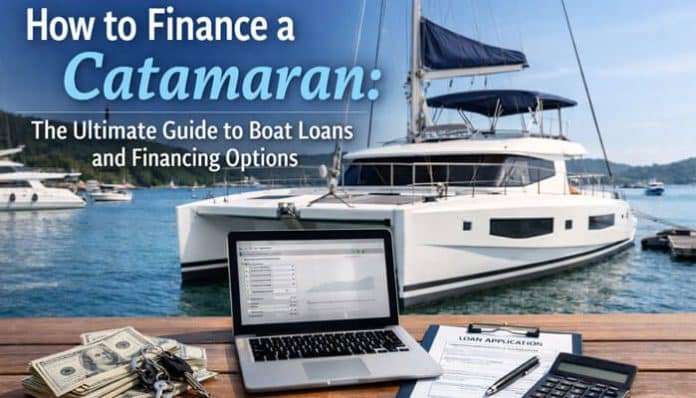

Buying a catamaran is a dream for many people, but the cost can be very high. Prices can range from tens of thousands to millions of dollars depending on size, brand, and features. That is why understanding how to finance a catamaran is essential before making a purchase.
Financing allows you to spread the cost over time instead of paying everything upfront. However, it requires careful planning, understanding loan options, and managing long-term expenses. With the right knowledge, you can make a smart financial decision and enjoy your catamaran without stress.
Financing a catamaran, with its large price tag, requires understanding your options, eligibility, and how to secure the best terms. This guide covers everything you need to know about financing a catamaran, including loan types, application processes, and tips to improve approval chances.
How Catamaran Financing Works
Catamaran financing is usually done through a secured marine loan, where the boat itself acts as collateral. This means the lender can take the boat if the loan is not repaid.
Key Features:
- Loan terms: 5 to 20 years
- Down payment: 10%–25%
- Interest rates: 6%–10%
- Large loan amounts available
Better financial profile = better loan terms
What Does It Cost to Buy a Catamaran?
The first step in financing a catamaran is understanding its cost. Catamarans are typically more expensive than monohulls due to their larger size, additional hull, and increased stability, making them suitable for long-term cruising and luxury living.
| Catamaran Type | Typical Price Range |
| Small Used Catamaran | $80,000 – $180,000 |
| Mid‑Size Used Cat | $180,000 – $500,000 |
| New Cruising Cat | $500,000 – $1,500,000+ |
| Luxury Yacht Catamaran | $1,500,000+ |
These costs reflect the range of used to new catamarans, with additional costs for customization or luxury features.
Understanding Catamaran Financing
Financing a catamaran is similar to obtaining a mortgage or car loan. The boat acts as collateral, meaning if you fail to repay the loan, the lender can seize the boat. Loans typically require good credit, stable income, and a significant down payment. Financing terms depend on various factors, such as the loan type and the borrower’s creditworthiness.
Financing options depend on:
- Your credit score
- Income stability
- Loan term
- Loan type
Loan Options for Catamaran Purchases
There are several types of loans available when financing a catamaran, each with its own advantages and conditions.
1.Traditional Boat Loans
Traditional boat loans are offered by banks, credit unions, and marine lenders. They are the most common type of loan for buyers with good to excellent credit scores.
- Term: Typically 5–20 years, depending on the price of the catamaran.
- Best for: Buyers who want stable, predictable terms and have a solid credit history.
2. Marine Mortgage
A marine mortgage is a loan specifically for purchasing a boat, functioning like a home mortgage. These loans are available for higher-value vessels like new or large catamarans.
- Term: Long terms, usually up to 20 years.
- Benefits: Generally lower interest rates compared to personal loans and can cover high-value vessels.
3. Personal Loans
If you don’t want to put up collateral, a personal loan may be an option. However, personal loans tend to have higher interest rates than secured loans.
- Pros: Quick approval and no collateral required.
- Cons: Higher interest rates, shorter repayment terms.
4. Yacht Financing
Specialized yacht financing is available for luxury catamarans. These loans offer favorable terms and often cater to buyers who need larger loans for high-end vessels.
- Benefits: Tailored to luxury boat buyers with long terms and competitive rates.
- Best for: High-net-worth individuals purchasing high-end catamarans.
5. Dealer Financing
Some dealerships offer in-house financing, allowing buyers to secure a loan directly through the boat dealer. This can streamline the process, but often comes with higher interest rates compared to traditional loans.
- Pros: Convenient, one-stop solution.
- Cons: Higher interest rates and less flexibility in terms.
6. Home Equity Loan or HELOC
You can tap into the equity of your home through a home equity loan or home equity line of credit (HELOC) to finance your catamaran. This allows you to borrow at lower interest rates, with the home as collateral.
- Benefits: Lower rates and longer terms.
- Cons: Risk of foreclosure if you fail to repay.
How to Qualify for a Boat Loan
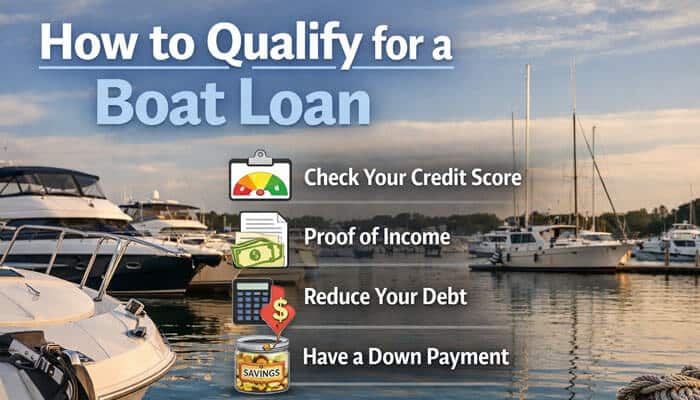
To qualify for a boat loan, lenders evaluate your financial stability and repayment ability. They use key factors like credit score, income, and debt levels to determine your eligibility. Understanding these requirements can help you prepare and improve your chances of approval.
1. Credit Score
Your credit score is one of the most important factors in boat loan approval. A higher score shows lenders that you are financially responsible and less risky. Most lenders prefer a score of 650 or higher, while 700+ can get better interest rates.
Examples:
- A borrower with a 720 score gets a lower interest rate
- A 680 score may still qualify but at higher rates
- A score below 600 may face loan rejection
2. Debt-to-Income (DTI) Ratio
The DTI ratio shows how much of your income goes toward existing debt payments. Lenders use this to assess whether you can handle additional loan payments. A lower DTI increases your chances of approval and better loan terms.
Examples:
- A person earning $5,000/month with $1,000 debt = good DTI
- High credit card debt reduces approval chances
- Lower DTI may result in faster loan approval
3. Income Verification
Lenders require proof of stable income to ensure you can repay the loan. This includes employment income, business income, or other financial sources. Consistent income improves your loan eligibility.
Examples:
- A salaried employee submits payslips
- A business owner provides tax returns
- Freelancers show bank statements for income proof
4. Down Payment
A higher down payment reduces the loan amount and lowers the lender’s risk. Most lenders require 10%–30% upfront, with 20% being common. A larger down payment can also reduce your interest rate.
Examples:
- Paying 20% down reduces monthly EMI
- A 30% down payment increases approval chances
- A low down payment may result in higher interest rates
Key Factors That Affect Financing
Several factors can affect your ability to finance a catamaran and the terms you receive. Lenders evaluate both the boat and your financial profile before approving a loan. Understanding these factors helps you plan better and secure favorable financing.
1. Boat Age and Condition
The age and condition of the boat play a major role in financing approval. New boats are easier to finance because they have higher value and lower risk. Older boats may require a larger down payment or higher interest rates.
- A brand-new catamaran gets lower interest rates
- A 10-year-old boat may need a higher down payment
- Poor condition boats may be harder to finance
2. Type of Loan
The type of loan you choose affects flexibility, interest rates, and approval criteria. Secured loans (marine loans) usually offer better terms because the boat is collateral. Personal loans are more flexible but come with higher interest rates.
- A secured marine loan offers lower EMI
- A personal loan has faster approval but higher cost
- Dealer financing may be convenient but slightly expensive
3. Loan Term Length
Loan term length determines your monthly payment and total interest paid. Shorter terms mean higher monthly payments but lower overall interest. Longer terms reduce monthly burden but increase total loan cost.
- A 10-year loan has higher EMI but saves interest
- A 20-year loan reduces monthly cost but increases total payment
- Short-term loans are better for long-term savings
4. Market Conditions
Interest rates and loan availability depend on overall economic conditions. When interest rates are low, financing becomes more affordable. During high inflation or economic uncertainty, loan rates may increase.
- Low interest rates reduce monthly payments
- Economic downturn may increase loan rates
- Strong economy improves financing options
Down Payment Requirements
Most lenders require a down payment of 10%–30% of the boat’s value, with the percentage varying based on factors like the boat’s age and the type of financing.
| Catamaran Age | Typical Down Payment |
| New | 15%–30% |
| Used | 20%–30% |
Interest Rates and Terms
Interest rates for boat loans depend on factors such as your credit score, loan type, and lender. Typically, boat loan interest rates range from 6% to 15%, with lower rates available to borrowers with strong credit. Longer loan terms may reduce monthly payments but often result in higher overall interest costs.
Interest Rate Examples (Approximate):
- Excellent credit: 6% – 8%
- Good credit: 8% – 11%
- Fair credit: 11% – 15%
Typical Loan Terms:
- 10 to 20 years, depending on loan amount and lender requirements
Additional Costs to Budget For
Financing a catamaran involves more than just monthly loan payments. There are several ongoing and one-time costs that can significantly impact your total budget. Planning for these expenses helps you avoid financial stress and ensures smooth ownership.
1. Insurance
Insurance is mandatory for most financed boats and protects against damage, accidents, and liability. The cost depends on the boat’s value, location, and usage.
Examples:
- Annual premium for a mid-size catamaran can be $3,000–$6,000
- Charter use may increase insurance cost
- Higher-value boats require more coverage
2. Docking / Marina Fees
Docking fees are the cost of keeping your catamaran at a marina. These fees vary based on location, boat size, and marina facilities.
Examples:
- Monthly marina fee ranges from $200 to $800
- Premium marinas in popular locations cost more
- Long-term docking contracts may offer discounts
3. Maintenance & Repairs
Regular maintenance is essential to keep your catamaran in good condition and safe for use. Costs can vary depending on age and usage.
Examples:
- Annual maintenance may cost 5%–10% of boat value
- Engine servicing and hull cleaning are recurring costs
- Older boats require more frequent repairs
4.Taxes & Registration
Boat ownership often includes taxes, registration fees, and licensing costs. These vary depending on your country or region.
Examples:
- Sales tax may apply at purchase
- Annual registration fees are required
- Import taxes may apply for international purchases
5. Survey Costs
A marine survey is usually required before buying a boat, especially for financing or insurance approval. It ensures the boat is in good condition.
Examples:
- Survey costs typically range from $500 to $2,000
- Required for older or used catamarans
- Helps identify hidden issues before purchase
6. Fuel & Supplies
Fuel and daily operational supplies are ongoing costs. These depend on how often and how far you travel.
Examples:
- Fuel cost varies based on engine usage
- Supplies include ropes, safety gear, and cleaning items
- Long trips increase operational expenses
Tips to Improve Loan Approval
Here are some tips to boost your chances of getting approved for a boat loan:
- Improve your credit score by paying down debts.
- Save for a larger down payment to reduce loan risk.
- Provide a stable income history and financial documentation.
- Shop around for the best rates and loan terms.
Tax Benefits and Implications of Catamaran Ownership
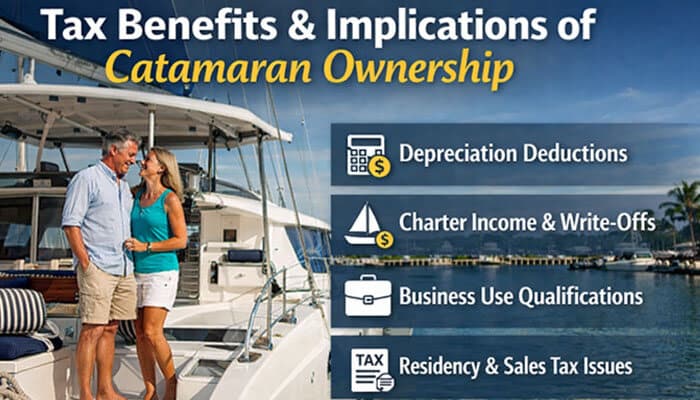
Owning a catamaran may provide certain tax benefits, especially if it is used for business or charter purposes. However, tax rules vary by location, so understanding both benefits and obligations is important before making financial decisions.
- Interest Deductions: You may deduct loan interest if the catamaran is used for business purposes
- Sales Tax: Some states charge sales tax, while others offer exemptions for business or charter use
Risk Management and Insurance Costs
Owning a catamaran involves financial and operational risks, making proper insurance and risk planning essential. Insurance protects your investment from accidents, damage, and liability while helping you meet lender requirements.
- Insurance protects against damage and liability
- Coverage includes hull and liability insurance
- Premium depends on boat value and usage
- Regular maintenance reduces risk
- Safety measures help lower insurance costs
Real-Life Case Studies and Testimonials
Real-life examples help you understand how catamaran financing works in practice. They show the approval process, challenges, and smart decisions made by buyers.
Case Study Example :
John, a first-time buyer, financed a 45ft catamaran through a marine lender. He had a good credit score and saved a 20% down payment, which helped him secure a lower interest rate and faster approval.
What John learned:
- Pre-approval made the buying process easier
- A higher down payment reduced monthly payments
- Comparing lenders helped him get better rates
How to Apply for a Boat Loan to Finance a Catamaran
Applying for a boat loan involves submitting financial documents and going through a lender’s approval process. Lenders review your income, credit, and boat details before making a decision.
Required Documentation:
- Proof of income (tax returns, pay stubs)
- Credit score report
- Boat survey and inspection report (especially for used boats)
- Identification and address verification
What to Expect During Approval:
- Initial review of application
- Underwriting process
- Potential documentation requests
Final approval or rejection
Timeline for How to Finance a Catamaran
Financing a catamaran usually follows a structured process that can take a few days to a couple of weeks. The exact timeline depends on lender requirements, documentation, and approval speed.
| Stage | Time |
| Pre-approval | 1–3 days |
| Loan approval | 1–3 days |
| Closing | 1–2 weeks |
Tips to Get the Best Financing
Getting the best financing requires smart planning and comparing options. Improving your financial profile can help you secure lower interest rates and better loan terms.
- Improve credit score
- Compare lenders
- Increase down payment
- Choose shorter loan term
- Work with experts
❌ Common Mistakes to Avoid
- Ignoring maintenance costs
- Taking high-interest loans
- Not comparing lenders
- Overestimating affordability
Example Catamaran Financing
| Category | Example |
| Price | $300,000 |
| Down Payment | $60,000 |
| Loan | $240,000 |
| Rate | 7% |
| Term | 15 years |
| Monthly Payment | ~$2,150 |
Tax Benefits of Catamaran Financing
Financing a catamaran may offer certain tax advantages, especially if it is used for business or charter purposes. However, eligibility depends on local tax laws and how the boat is used.
Possible Benefits:
- Loan interest may be tax-deductible
- Charter use may qualify for business expense deductions
- Depreciation can reduce taxable income over time
Is Financing a Catamaran Worth It?
Financing a catamaran can be a smart choice if it aligns with your financial goals and long-term plans. It allows you to preserve cash while enjoying ownership, but it also requires careful budgeting and commitment.
Financing is beneficial if:
- You want to keep cash reserves
- You plan long-term use
- You can afford maintenance
Avoid financing if:
- Costs exceed your budget
- Income is unstable
Final Thoughts
Financing a catamaran can make ownership possible without paying the full cost upfront, but it requires careful planning and smart financial decisions. By understanding loan options, interest rates, down payment requirements, and additional ownership costs, you can choose the best financing strategy for your situation.
Ultimately, knowing how to finance a catamaran helps you avoid costly mistakes and secure better loan terms. With proper research, a strong financial profile, and the right lender, you can confidently move forward and turn your dream of owning a catamaran into reality.
How to Finance a Catamaran FAQs
1 . How to finance a catamaran?
You can finance a catamaran through marine loans, banks, or dealer financing. Most lenders require a 10%–25% down payment, good credit, and stable income.
2. What credit score is needed for catamaran financing?
A minimum credit score of around 650 is usually required by most lenders. However, a score of 700 or higher can help you qualify for lower interest rates and better loan conditions. Strong credit improves approval chances.
3. How much down payment is required for a catamaran loan?
Most lenders require a down payment between 10% and 30% of the boat’s value. A higher down payment reduces the loan amount and interest cost. It also improves your chances of loan approval.
4. How long are catamaran loan terms?
Catamaran loan terms typically range from 5 to 20 years depending on the loan size. Longer terms lower your monthly payments but increase total interest paid. Shorter terms save money over time.
5. What are the additional costs of owning a catamaran?
In addition to loan payments, you must budget for insurance, marina fees, maintenance, taxes, and fuel. These ongoing costs can significantly increase the total cost of ownership. Proper planning is essential.