
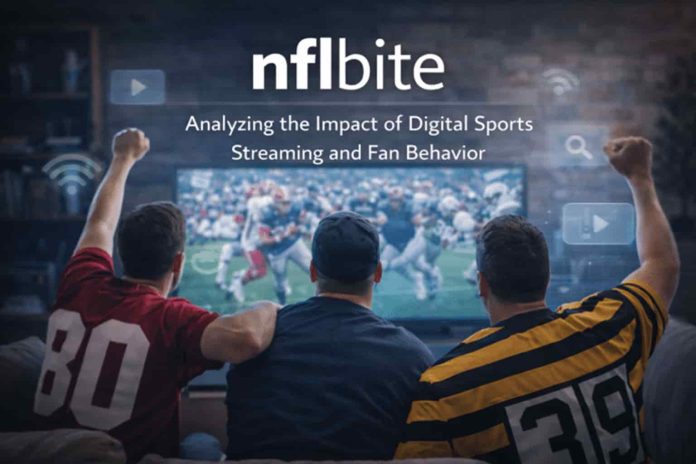

The way audiences consume professional sports has changed dramatically over the past decade. Traditional broadcast television no longer dominates the viewing experience. Instead, digital platforms, community-driven forums, and unofficial aggregation sites have reshaped how fans access live events. Within this evolving ecosystem, nflbite has become a widely searched and frequently referenced name.
Understanding nflbite requires more than simply identifying it as a streaming-related term. It represents a broader shift in digital behavior, content accessibility expectations, and fan engagement patterns. It also highlights complex issues surrounding licensing, user experience, and the tension between demand and distribution models.
This article provides a comprehensive, expert-level examination of nflbite from strategic, technological, behavioral, and ethical perspectives. Rather than offering surface commentary, we will explore the structural forces that drive interest in nflbite and what it reveals about the future of digital sports consumption.
What Is nflbite?
At its core, nflbite is commonly associated with online access to professional football game streams. It emerged as part of a broader wave of digital communities that aggregated links to live sports broadcasts, often outside official licensing frameworks.
However, describing nflbite solely as a streaming access point misses the larger picture. It is better understood as a response to evolving consumer expectations. Fans increasingly expect:
-
Instant access
-
Device flexibility
-
Global availability
-
Minimal subscription friction
When official broadcast systems fail to meet these expectations, alternative digital pathways often emerge.
nflbite became popular not only because it offered access, but because it addressed perceived gaps in convenience, pricing, and accessibility.
The Digital Consumption Shift Driving nflbite
To understand the rise of nflbite, it is important to examine broader consumption patterns.
Over the past decade, audiences have shifted from linear television schedules to on-demand digital platforms. Viewers now expect control over when, where, and how they watch content. Mobile devices, smart televisions, and cross-platform integration have become standard.
Traditional broadcast systems were built around geographic rights, cable bundles, and regional licensing. These systems often require:
-
Long-term subscriptions
-
Geographic restrictions
-
Multiple platform logins
-
Blackout limitations
When fans encounter friction, they seek alternatives.
nflbite reflects this friction gap. It is not merely about avoiding payment; it is about perceived accessibility inefficiencies in official distribution systems.
Behavioral Economics Behind nflbite Popularity
The popularity of nflbite can also be explained through behavioral economics.
Consumers assess value based not only on cost, but on convenience and perceived fairness. When viewers believe they are overpaying for fragmented access, frustration builds.
Three behavioral drivers often influence the search for alternatives:
-
Loss aversion – Fans do not want to miss live games, especially high-stakes matchups.
-
Immediate gratification – Live sports lose value when delayed.
-
Community effect – When peers reference a platform, trust increases.
nflbite gained traction partly because it became embedded in online fan communities. Shared knowledge reduced perceived risk and increased adoption.
Legal and Ethical Considerations
It is essential to address the legal and ethical landscape surrounding nflbite.
Professional sports leagues operate through complex licensing agreements. Broadcasting rights are sold to networks and digital partners under strict contractual frameworks. Unauthorized redistribution of live broadcasts can violate intellectual property laws in many jurisdictions.
From a strategic standpoint, this creates tension between consumer demand and rights-holder protection.
Rights holders invest billions in media contracts. Revenue from these agreements funds player salaries, stadium infrastructure, youth development programs, and league operations. When viewership migrates outside official channels, financial models are affected.
At the same time, fans often argue that geographic blackouts or fragmented subscriptions reduce accessibility.
The nflbite phenomenon exists at the intersection of these competing priorities.
Technological Infrastructure Behind Aggregation Platforms
Platforms associated with nflbite typically do not host content directly. Instead, they aggregate external links. This distinction is important.
Aggregation reduces hosting liability but introduces other risks:
-
Link instability
-
Malware exposure
-
Inconsistent stream quality
-
Sudden shutdowns
From a cybersecurity perspective, unofficial streaming environments can expose users to phishing attempts or intrusive advertising scripts.
For organizations and IT professionals, this raises broader concerns. Employees accessing unauthorized streaming sites on corporate networks can create security vulnerabilities.
Understanding nflbite therefore extends beyond entertainment—it intersects with digital risk management.
Comparison With Official Streaming Alternatives
To evaluate nflbite objectively, it is useful to compare it structurally with licensed platforms.
Official streaming services generally provide:
-
High-definition reliability
-
Customer support
-
Secure payment systems
-
Long-term access consistency
Unofficial aggregation platforms often offer:
-
Free access
-
Fewer geographic barriers
-
Minimal registration requirements
However, trade-offs include legal risk, stream instability, and security exposure.
The key difference lies in sustainability. Licensed models operate within regulated ecosystems. Aggregation models often face shutdown cycles, domain shifts, and enforcement pressure.
This cyclical instability has been a recurring pattern in the broader digital streaming landscape.
Strategic Impact on the Sports Industry
The continued search interest in nflbite signals an industry-level message.
Sports organizations must balance three competing priorities:
-
Revenue protection
-
Global fan accessibility
-
Platform simplicity
When any one of these elements is neglected, alternative ecosystems emerge.
Some leagues have responded by investing in direct-to-consumer platforms. Others have expanded international streaming partnerships. These shifts demonstrate recognition that accessibility gaps can undermine long-term engagement.
The existence of nflbite conversations highlights unmet consumer expectations rather than isolated rule-breaking behavior.
Common Misconceptions About nflbite
Several misconceptions deserve clarification.
First, not all users of aggregation platforms are attempting to avoid payment entirely. Many are already subscribers but encounter regional restrictions or blackout rules.
Second, nflbite does not represent a single centralized organization. It has often functioned as a domain-based aggregation concept rather than a formal entity.
Third, popularity does not equate to legality. High search volume reflects demand, not compliance status.
Understanding these nuances prevents oversimplification and promotes informed discussion.
Long-Term Outlook: Evolution or Enforcement?
The long-term trajectory of platforms associated with nflbite depends on two primary forces:
-
Enforcement intensity
-
Innovation in official distribution models
Historically, enforcement alone has not eliminated demand-driven alternatives. Sustainable change typically occurs when official platforms reduce friction.
For example, industries such as music and film saw significant piracy declines after subscription services became affordable, global, and user-friendly.
The sports industry faces a similar inflection point. If access becomes seamless and reasonably priced across regions, interest in aggregation models may decline organically.
Authority and Trust: Why This Topic Matters
The discussion around nflbite is not trivial. It reflects broader structural issues in digital content distribution.
From a governance perspective, protecting intellectual property ensures financial sustainability. From a consumer perspective, equitable access fosters loyalty and long-term engagement.
Organizations must approach this issue strategically rather than reactively. Transparent pricing models, reduced blackout complexity, and global digital infrastructure investment are central to long-term resolution.
Ignoring consumer friction creates space for alternative ecosystems to grow.
Ultimately, nflbite serves as a case study in how digital markets respond when demand and accessibility misalign.
Frequently Asked Questions
What is nflbite commonly associated with?
nflbite is commonly associated with online access to professional football game streams. It has functioned as an aggregation concept linking to live broadcasts, often outside official distribution channels, reflecting changing digital consumption patterns.
Is nflbite an official streaming service?
No, nflbite is not an official licensed streaming provider. It has historically operated as a link aggregation platform rather than a sanctioned broadcaster under formal media rights agreements.
Why do people search for nflbite?
People search for nflbite due to accessibility challenges such as regional restrictions, subscription costs, or blackout rules. It reflects consumer demand for immediate and flexible digital access to live sports events.
Are there risks associated with using nflbite?
Yes. Risks can include legal uncertainty, unstable streaming quality, exposure to malicious advertisements, and cybersecurity concerns. Aggregation platforms often lack the security protections found in licensed services.
How does nflbite impact the sports industry?
nflbite highlights friction between consumer expectations and official distribution models. Persistent demand signals the need for improved accessibility, simplified subscriptions, and globally scalable digital strategies.
Will platforms like nflbite continue to exist?
Their persistence depends on enforcement actions and improvements in official streaming ecosystems. Historically, demand-driven alternatives decline when licensed services become more affordable, accessible, and technologically seamless.
Conclusion
nflbite is more than a search term. It represents a structural tension in the digital sports economy.
Its visibility reflects shifting consumer expectations, technological evolution, and the complexity of global media rights. While legal and ethical considerations are central to the discussion, the broader lesson lies in accessibility design.
Industries that reduce friction tend to reduce alternatives organically. Those that ignore demand gaps often see parallel ecosystems emerge.
For decision-makers, analysts, and digital strategists, nflbite offers insight into how modern audiences behave when convenience, cost, and access intersect.
Understanding that behavior is essential for building sustainable, future-ready distribution systems.
