

Introduction
In elite sports, certain moments transcend the game itself. They become cultural reference points, leadership case studies, and symbols of competitive psychology. The phrase shaq timeout represents one such moment—widely discussed, frequently referenced, and often misunderstood.
At first glance, it appears to describe a simple pause in a basketball game involving Shaquille O’Neal. Yet the broader narrative surrounding shaq timeout goes far deeper. It touches on leadership dynamics, locker-room communication, media interpretation, and the strategic importance of momentum in high-pressure competition.
This article examines shaq timeout not as a meme or isolated highlight, but as a case study in sports leadership, in-game decision-making, and psychological impact. By unpacking the strategic layers behind the phrase, we gain insight into how elite athletes influence the tempo and emotional direction of competition.
Understanding the Context of Shaq Timeout
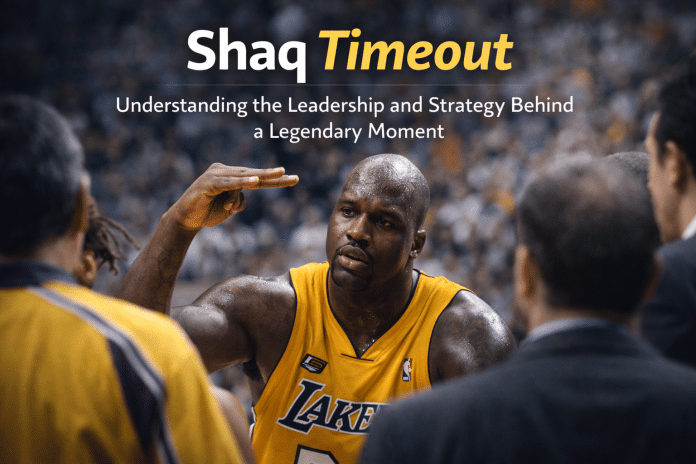
To understand shaq timeout, it is important to clarify what the phrase typically refers to. It generally describes a moment during a basketball game when Shaquille O’Neal either called for, reacted to, or was associated with a timeout in a highly visible or emotionally charged situation.
Timeouts in professional basketball are not mere breaks. They are strategic reset points. Coaches use them to halt opposing momentum, adjust defensive schemes, reorganize offensive spacing, and manage player fatigue. Players, especially veteran leaders, often influence when those pauses occur.
Shaquille O’Neal, known for his dominant physical presence and strong personality, played in high-stakes environments throughout his career. When discussions around shaq timeout arise, they often highlight a moment where leadership, frustration, or competitive intensity surfaced publicly.
The Strategic Role of Timeouts in Basketball
To appreciate shaq timeout, we must understand the broader strategic function of timeouts.
In high-level basketball, timeouts serve three primary purposes:
- Momentum interruption
- Tactical recalibration
- Psychological stabilization
Momentum is one of the most underestimated forces in competitive sports. When an opposing team scores consecutively, the emotional temperature shifts. A well-timed timeout prevents escalation.
Tactically, timeouts allow teams to adjust coverage, reorganize matchups, or draw specific plays designed to exploit weaknesses.
Psychologically, they provide space. Elite athletes perform under extreme pressure. Even a sixty-second reset can restore clarity.
When shaq timeout is referenced, it often symbolizes one of these dynamics—particularly the intersection of momentum and leadership authority.
Leadership Dynamics: Player Influence vs. Coaching Authority
One reason shaq timeout remains a compelling topic is that it reflects the tension between player influence and coaching control.
In professional sports, star players often hold informal authority. Their experience, performance level, and personality grant them influence beyond their official role. Shaquille O’Neal, during his prime years, was not simply a player. He was a central pillar of team identity.
When a dominant player signals frustration or calls attention to the need for a timeout, it can reshape team dynamics instantly. Teammates respond. Coaches recalibrate.
This raises important leadership questions:
- Who controls the emotional tempo of the team?
- When should a player assert authority?
- How does visible disagreement affect group cohesion?
The shaq timeout narrative illustrates how public moments in sport often reflect deeper leadership structures.
Psychological Impact of High-Visibility Moments
Elite athletes operate in environments where every gesture is scrutinized. A visible reaction during a timeout—whether frustration, assertiveness, or urgency—can be interpreted in multiple ways.
In the case of shaq timeout, observers may view the moment as:
- Competitive intensity
- Strategic assertiveness
- Emotional volatility
- Leadership intervention
Context determines interpretation.
From a sports psychology perspective, visible emotion is not inherently negative. In fact, controlled intensity can elevate team focus. However, unmanaged frustration can disrupt cohesion.
The lesson embedded in shaq timeout is not about emotion suppression. It is about emotional direction. Elite competitors must channel intensity constructively.
Media Amplification and Narrative Creation
Another reason shaq timeout continues to circulate is media amplification.
Modern sports coverage does not simply document events. It constructs narratives. A brief sideline exchange can be replayed repeatedly, discussed in commentary panels, and reframed across social platforms.
Once labeled, a moment becomes a brand. Shaq timeout evolved from a situational occurrence into a shorthand phrase representing competitive fire and strong personality.
This transformation highlights a broader dynamic: in the digital era, isolated moments often outlive entire seasons. Athletes must navigate not only performance but perception.
The strategic implication extends beyond basketball. Public-facing leaders in any field operate in a media ecosystem where micro-moments can shape long-term narratives.
Misconceptions Surrounding Shaq Timeout
Several misconceptions often surround shaq timeout.
One common misunderstanding is that such moments represent instability or internal conflict. In reality, high-performing teams frequently display visible intensity. Conflict, when managed constructively, can improve performance.
Another misconception is that calling attention to a timeout signals loss of control. Strategically, it can demonstrate awareness. Recognizing the need to pause before momentum spirals is often a sign of experience.
Finally, some assume that such moments undermine coaching authority. However, elite teams often operate with shared leadership models. Veteran players contribute situational insights that complement coaching strategy.
Understanding these nuances prevents oversimplification.
Real-World Leadership Parallels
The strategic lessons from shaq timeout extend beyond sport.
In business, high-stakes negotiations, crisis management situations, or product launches can create intense momentum swings. Leaders must know when to “call a timeout.”
This involves:
- Pausing a failing initiative
- Reassessing strategy
- Re-centering team alignment
- Resetting emotional climate
The ability to interrupt momentum constructively is a leadership skill.
Shaq timeout, viewed symbolically, represents decisive intervention during escalation. It reflects the courage to pause rather than allow chaos to dictate outcomes.
Long-Term Impact on Legacy and Perception
Moments like shaq timeout contribute to an athlete’s broader legacy.
Shaquille O’Neal’s career was defined by dominance, charisma, and visible competitiveness. High-intensity sideline moments reinforced that persona. For some audiences, this enhanced his image as a passionate competitor. For others, it invited debate.
Legacy is shaped not only by statistics but by narrative memory.
In professional environments, reputational capital accumulates through repeated public impressions. Leaders must understand that visible reactions become part of their long-term brand.
Why Shaq Timeout Still Matters Today
The continued interest in shaq timeout reflects more than nostalgia.
It represents a case study in:
- Competitive psychology
- Leadership dynamics
- Media framing
- Momentum management
In a sports world increasingly driven by analytics and data, human emotion remains decisive. Teams win not only through strategy but through resilience, communication, and emotional calibration.
Shaq timeout serves as a reminder that elite performance exists at the intersection of structure and intensity.
Authority, Trust, and Strategic Perspective
Analyzing shaq timeout through a strategic lens reinforces broader principles of leadership and performance.
In high-pressure environments, structured systems are essential—but they are insufficient without emotional intelligence. Leaders must recognize when to accelerate and when to pause.
Evidence from sports psychology consistently shows that controlled resets improve decision-making accuracy and reduce error rates under stress. Timeouts are not interruptions; they are strategic recalibrations.
From a risk management perspective, failing to pause during negative momentum increases the probability of compounded mistakes.
The enduring relevance of shaq timeout lies in this principle: the strongest competitors understand timing—not just effort.
In both sport and organizational leadership, knowing when to reset is a defining skill.
Frequently Asked Questions
What does shaq timeout refer to?
Shaq timeout refers to a notable basketball moment involving Shaquille O’Neal and a visible timeout situation. The phrase often symbolizes leadership intensity, momentum management, and strategic pauses during high-pressure games rather than a single isolated event.
Why is shaq timeout discussed so frequently?
Shaq timeout gained attention due to media coverage and public interest in emotional, high-visibility moments during competitive games. Such instances highlight leadership dynamics and psychological intensity, making them memorable beyond the immediate sporting context.
Was shaq timeout a negative moment?
Not necessarily. Shaq timeout can be interpreted as competitive urgency or leadership intervention. High-performing teams often display visible emotion during critical moments. Context determines whether the moment reflects frustration, strategy, or momentum control.
How do timeouts impact basketball strategy?
Timeouts interrupt opposing momentum, allow tactical adjustments, and help players reset mentally. In situations like shaq timeout, the pause can shift game tempo, reinforce strategy, and stabilize emotional intensity during crucial stretches of competition.
What leadership lessons can be learned from shaq timeout?
Shaq timeout illustrates the importance of decisive intervention during escalation. Leaders in any field can learn the value of pausing to reassess strategy, manage emotion, and restore alignment before negative momentum becomes irreversible.
Why does shaq timeout remain relevant today?
Shaq timeout remains relevant because it represents universal themes of leadership, perception, and performance under pressure. The moment continues to be referenced as an example of emotional intensity intersecting with strategic decision-making.
Conclusion
The phrase shaq timeout captures more than a sideline exchange. It represents a layered intersection of strategy, psychology, leadership, and media narrative.
Timeouts are not merely breaks in action. They are opportunities to recalibrate momentum and reassert control. When viewed through a broader lens, shaq timeout becomes a case study in decisive leadership under pressure.
In competitive environments—whether athletic or organizational—the ability to pause strategically often determines long-term outcomes. Intensity drives performance, but timing directs it.
For those studying leadership, team dynamics, or high-performance psychology, shaq timeout offers enduring insight into the power of controlled resets in moments that matter most.
