

Snapchat is built around presence, immediacy, and visual communication. Small visual indicators often carry significant meaning inside the platform’s ecosystem. One of the most frequently asked questions users have is: what does the green dot mean on Snapchat?
At first glance, the green dot seems simple. But in reality, it reflects Snapchat’s broader design philosophy around activity status, privacy, and social awareness. Understanding it correctly can prevent misunderstandings, reduce anxiety, and help users manage their digital interactions more strategically.
In this in-depth guide, we’ll go far beyond the surface explanation. You’ll learn not only what the green dot represents, but how it functions technically, why it exists, how it affects user behavior, and what it means for privacy in modern social platforms.
Understanding What the Green Dot Means on Snapchat
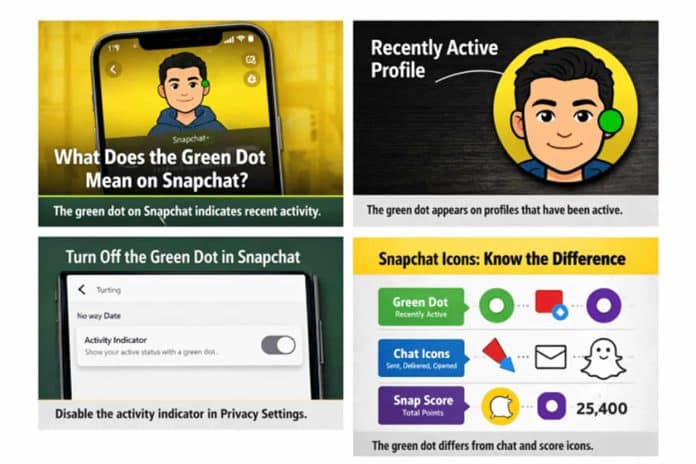
The green dot on Snapchat is an activity indicator. It signals that a user has been recently active on the platform.
More specifically, the green dot appears on a user’s profile avatar within certain areas of the app, particularly in the “Add Friends” or Quick Add sections. Its purpose is to show that the person has used Snapchat recently, which increases the likelihood that they will respond to messages or friend requests.
It does not necessarily mean the person is currently online in real time. That is one of the most common misconceptions.
Snapchat intentionally avoids labeling users as “online” or “offline.” Instead, it uses softer activity indicators like the green dot to preserve privacy while still encouraging interaction.
Why Snapchat Uses a Green Dot Instead of an Online Label
Snapchat’s design philosophy prioritizes low-pressure communication. Unlike traditional messaging apps that display “Active Now” or precise timestamps, Snapchat prefers ambiguity.
The green dot is a strategic compromise between:
- Social visibility
- Privacy protection
- Engagement optimization
By showing recent activity rather than live status, Snapchat creates an environment where users feel more comfortable interacting without the pressure of immediate responsiveness.
This subtlety reduces:
- Social anxiety
- Expectations of instant replies
- Real-time surveillance concerns
In platform design terms, this is a behavioral moderation tool.
Where the Green Dot Appears on Snapchat
The green dot typically appears in the following areas:
1. Quick Add Section
When Snapchat suggests users you may know, profiles that show a green dot have recently been active.
2. User Profiles
When viewing someone’s profile, you may see the green dot near their Bitmoji or avatar, indicating recent activity.
It does not consistently appear in chat threads as a live presence marker. Snapchat avoids showing “typing” or “online” states in a traditional sense.
What the Green Dot Does NOT Mean
Many users misinterpret the green dot. It’s important to clarify what it does not represent:
- It does not confirm someone is actively using the app at that exact moment.
- It does not mean they have seen your message.
- It does not guarantee they are available to respond.
- It does not reveal how long they were active.
Snapchat deliberately keeps the data imprecise. This protects user autonomy and prevents digital pressure cycles common on other platforms.
Understanding what the green dot means on Snapchat requires recognizing that it signals recent presence, not live engagement.
How “Recently Active” Is Defined
Snapchat does not publicly disclose the exact timeframe that qualifies as “recently active.” However, behavioral analysis suggests it usually indicates activity within the past several hours.
This ambiguity serves a purpose. If users knew the exact threshold—such as “active within 5 minutes”—it would reintroduce the pressure Snapchat aims to avoid.
From a product strategy perspective, this is known as intentional opacity: revealing enough information to encourage engagement, but not enough to create friction.
Privacy Settings and Controlling the Green Dot
Users can control whether others see their activity indicator.
To manage this:
- Open Snapchat settings.
- Navigate to “Privacy Controls.”
- Locate the Activity Indicator option.
- Toggle it on or off.
If you disable it, others will not see your green dot. However, you also won’t see theirs. Snapchat applies reciprocity in privacy features.
This mutual visibility system reinforces fairness and reduces asymmetrical monitoring behavior.
Psychological Impact of the Green Dot
Small indicators have outsized behavioral effects.
The green dot influences:
- Response expectations
- Perceived availability
- Social validation
- Anxiety around delayed replies
In digital communication research, activity indicators can create what’s known as “presence pressure.” When users believe someone is online, they may expect immediate responses. Snapchat mitigates this by avoiding precise timestamps.
Understanding what the green dot means on Snapchat can help users detach from assumptions and reduce unnecessary stress.
How the Green Dot Supports Snapchat’s Engagement Strategy
From a business and product design perspective, the green dot serves measurable objectives.
It increases:
- Friend acceptance rates
- Message initiation
- User retention
- Session frequency
When users see that someone has been recently active, they are more likely to initiate contact. This drives micro-interactions, which fuel overall platform growth.
Unlike aggressive engagement tactics, this approach is subtle. It nudges behavior without overtly manipulating urgency.
Differences Between the Green Dot and Other Snapchat Indicators
Snapchat uses multiple visual signals. It’s important not to confuse them.
Green Dot vs. Snap Score
Snap Score reflects cumulative activity, not recent presence.
Green Dot vs. Chat Icons
Chat icons indicate message status (sent, delivered, opened), not activity.
Green Dot vs. Story Updates
Story rings indicate new content, not whether someone is active.
Each symbol serves a different function within Snapchat’s communication architecture.
Understanding what the green dot means on Snapchat requires distinguishing it from these other visual cues.
Real-World Usage Scenarios
To clarify how this works in practice, consider a few examples:
Scenario 1: Sending a Friend Request
If you see a green dot next to a suggested contact, you can reasonably assume they’ve been active recently, increasing the likelihood they’ll accept quickly.
Scenario 2: Messaging a Casual Contact
Seeing the green dot may signal it’s a good time to send a message, but it should not create expectations of an instant reply.
Scenario 3: Managing Boundaries
If you prefer privacy, disabling your own activity indicator reduces perceived availability.
These examples show how small signals shape communication strategy.
Common Misconceptions
Several myths surround what the green dot means on Snapchat.
Myth 1: It means they’re ignoring me.
Reality: It only shows recent activity, not message engagement.
Myth 2: It tracks live location.
Reality: It has no connection to Snap Map or geographic tracking.
Myth 3: It reveals how long someone was online.
Reality: Snapchat does not display duration.
These misunderstandings often stem from comparing Snapchat to other messaging apps that use more explicit presence indicators.
Authority Perspective: Why This Feature Matters in Modern Digital Communication
In the broader context of digital sociology and platform governance, activity indicators like the green dot represent a careful balance between transparency and privacy.
Overexposure of real-time activity can lead to:
- Surveillance behaviors
- Social burnout
- Compulsive responsiveness
- Relationship conflicts
Snapchat’s design reduces those risks by avoiding hyper-precise data. This reflects a growing industry trend toward ethical engagement design.
From a long-term user trust perspective, features that respect psychological boundaries improve platform sustainability. Users are more likely to remain active when they feel autonomy over their visibility.
Understanding what the green dot means on Snapchat is therefore not just about app functionality—it’s about digital boundary management in a hyper-connected world.
Frequently Asked Questions
1. What does the green dot mean on Snapchat exactly?
The green dot indicates that a user has been recently active on Snapchat. It does not confirm they are currently online. It simply signals recent app usage to encourage interaction while maintaining privacy.
2. Does the green dot mean someone is online right now?
No. The green dot does not guarantee real-time presence. It reflects recent activity within an unspecified timeframe, which may range from minutes to several hours.
3. Can I turn off the green dot on Snapchat?
Yes. Users can disable the activity indicator in Snapchat’s privacy settings. When turned off, others will not see your green dot, and you will not see theirs either.
4. Why can I see the green dot for some users but not others?
You can only see the green dot for users who have their activity indicator enabled. If someone disables this feature, their recent activity will not be visible to you.
5. Does the green dot mean someone saw my message?
No. The green dot only reflects recent activity on Snapchat. Message status is indicated separately through chat icons that show sent, delivered, or opened states.
6. How long does the green dot stay visible?
Snapchat does not publicly define the exact duration. It generally represents recent usage within a short timeframe but avoids specifying exact minutes or hours.
7. Is the green dot connected to Snap Map?
No. The green dot is unrelated to location sharing or Snap Map. It strictly indicates recent activity and does not reveal geographic data.
Conclusion
So, what does the green dot mean on Snapchat?
At its core, it signals recent activity—nothing more and nothing less. It is not a live tracker, not a message receipt, and not a measure of responsiveness. It is a carefully designed engagement tool that balances visibility with privacy.
Understanding this nuance helps users avoid misinterpretations, reduce social anxiety, and navigate digital communication more confidently.
In an era where online presence can feel overwhelming, subtle design choices like the green dot represent an intentional move toward healthier interaction patterns. When used wisely—and understood correctly—it becomes a helpful indicator rather than a source of confusion.
If you want to use Snapchat more strategically, start by understanding its signals. Small icons often carry deeper meaning than they first appear.
